Mount Roraima Trekking Expedition: Venezuela’s Lost World
There are mountains, and then there is Mount Roraima. Rising nearly 2,300m (7,545ft) from the savannahs of the Gran Sabana, this ancient tepui in southern Venezuela is one of the most extraordinary places on Earth — a flat-topped sandstone plateau draped in mist, populated by species found nowhere else in the world, and steeped in indigenous legend stretching back thousands of years. Sir Arthur Conan Doyle used it as the inspiration for The Lost World. It sits at the tripoint of Venezuela, Brazil, and Guyana, as if belonging to none and all of them at once.
NAHUA EXPEDITIONS
30 May 2026 ・ 9 min read
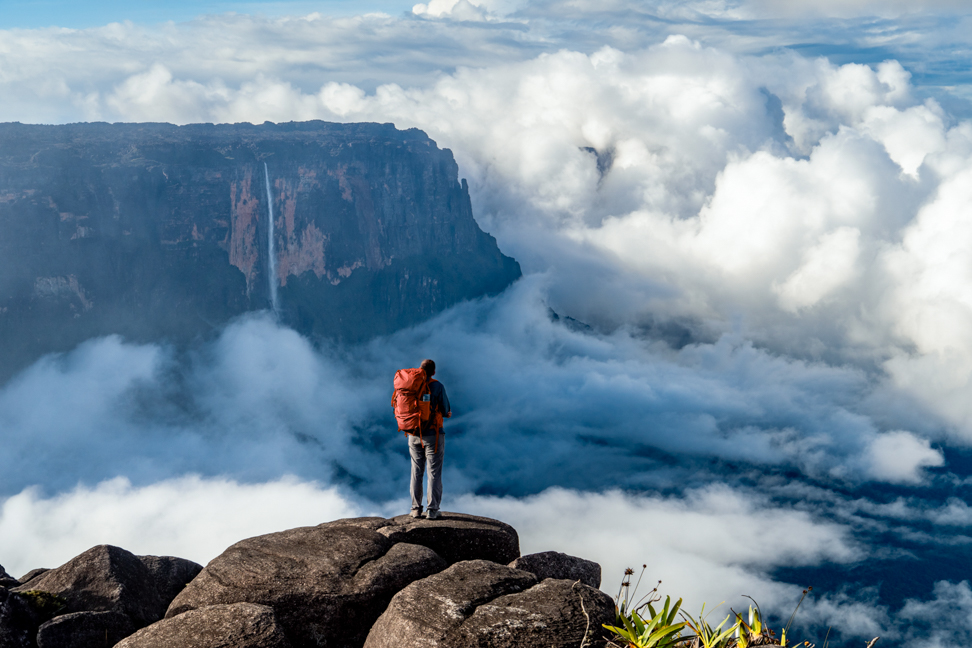
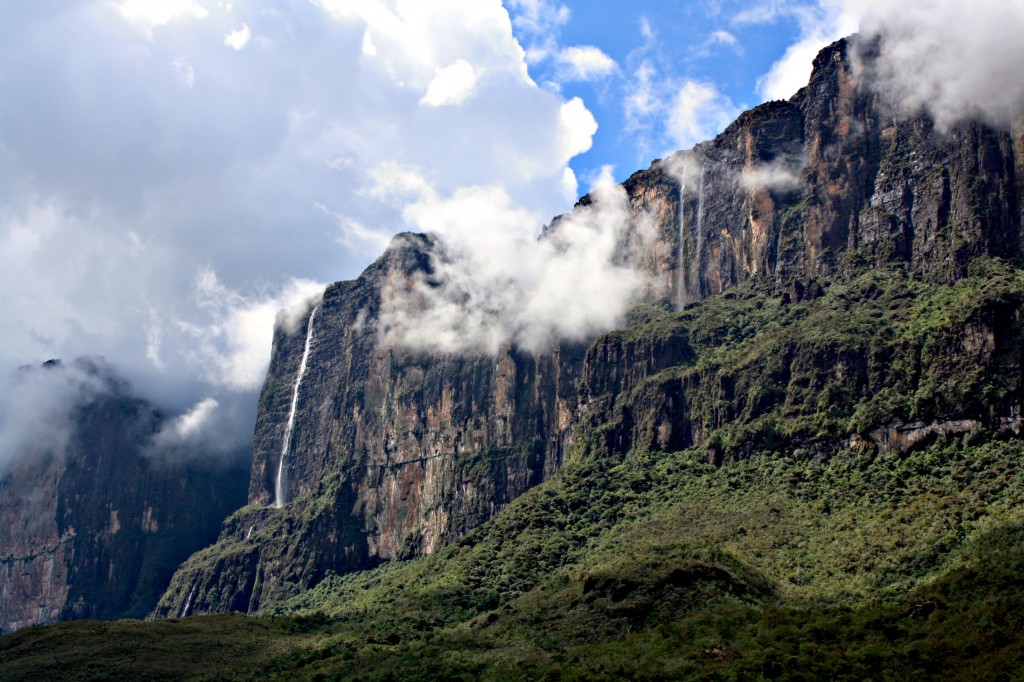
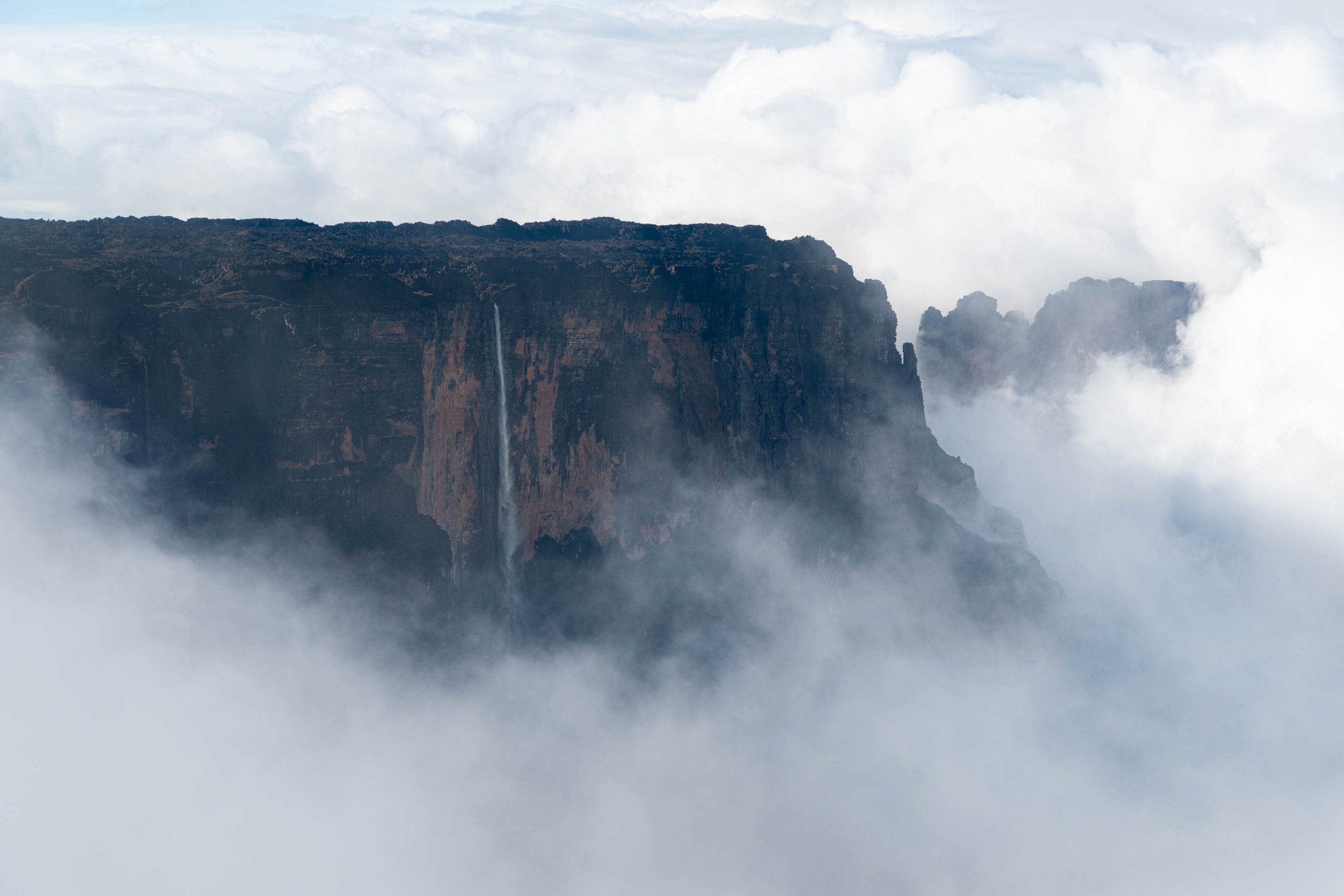
A person overlooking a distant waterfall on our Mount Roraima Expedition. Photo: Nahua Expeditions
We are proud to announce that Nahua Expeditions is running a guided 12-day trek to the summit of Mount Roraima. This is an expedition built for serious adventure hikers who want to experience one of South America’s most remote and remarkable landscapes — done properly, safely, and at a depth most visitors never reach.
Mount Roraima is the tallest of the tepuis — the ancient table-top mountains that define the Gran Sabana landscape of Venezuela’s Bolívar state, part of Canaima National Park, a UNESCO World Heritage Site. The word “tepui” comes from the Pemón indigenous language and translates roughly to “house of the gods.” Roraima, at its summit plateau, earns that name.
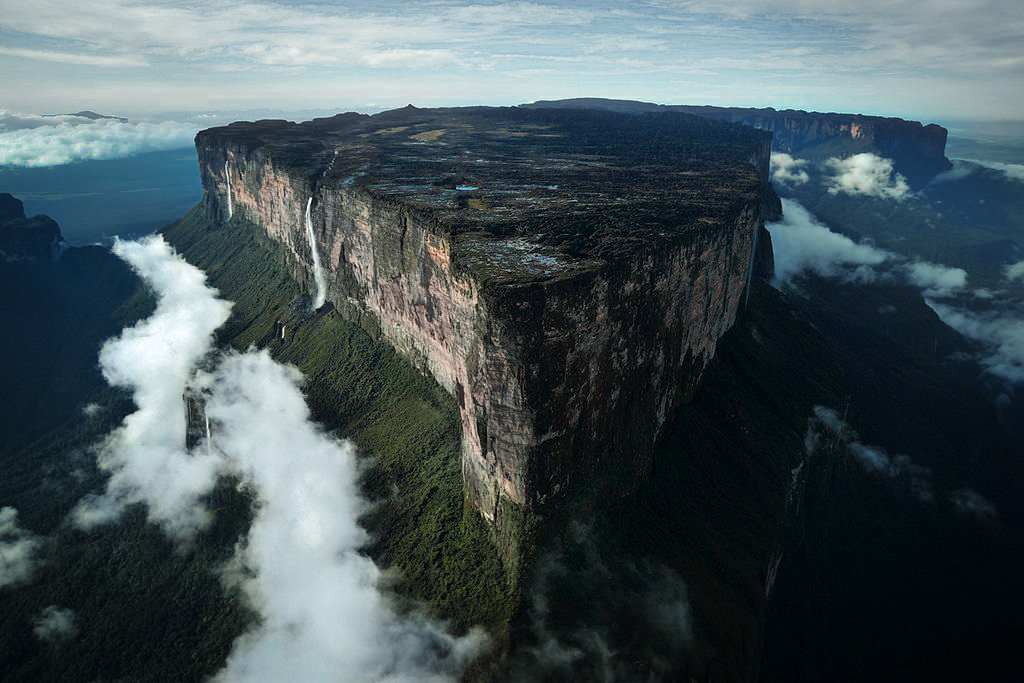
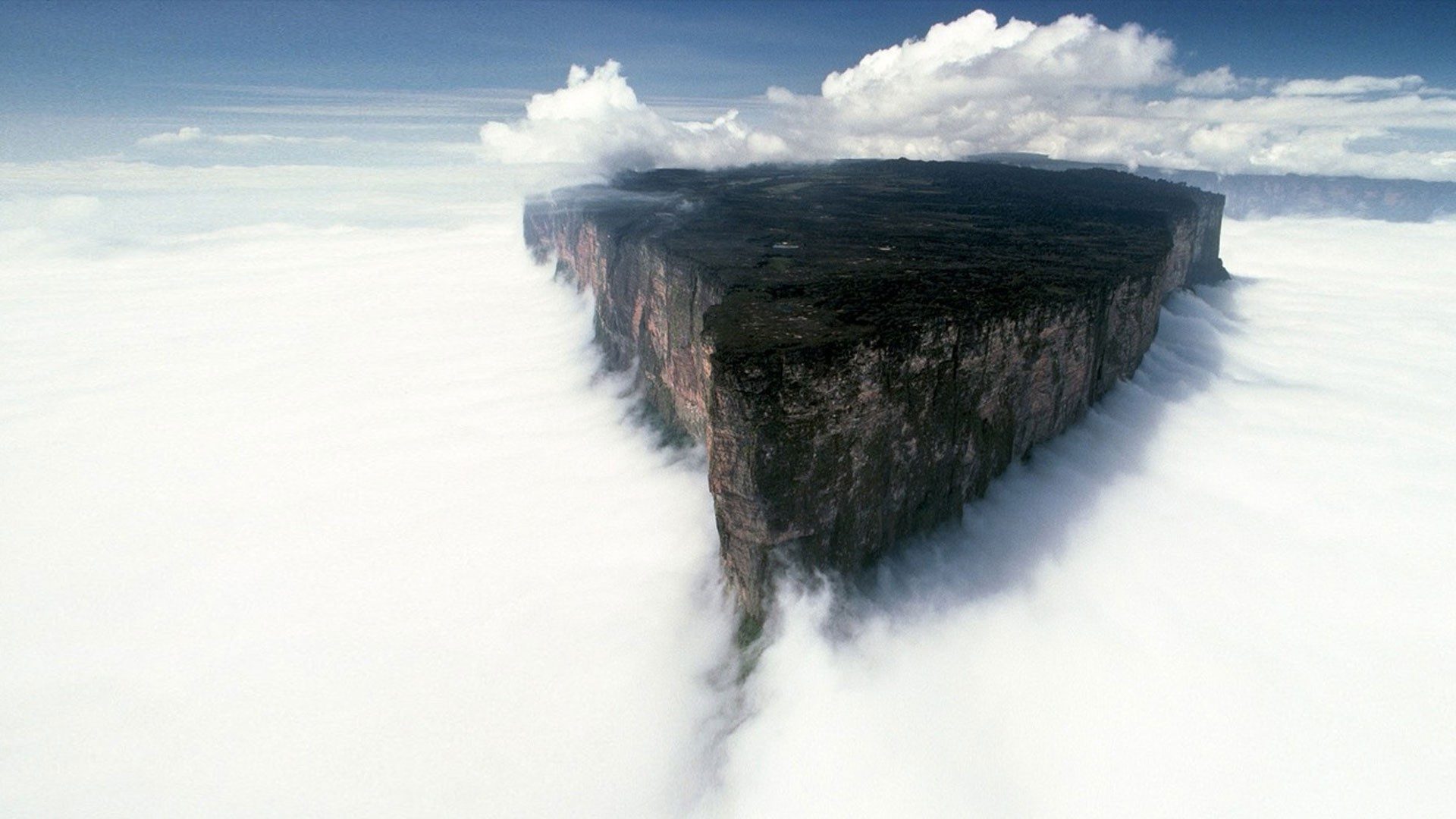
Roraima Tepui aerial image, facing south from Guyana
Geologically, the tepuis are among the oldest rock formations on the planet — Precambrian sandstone estimated to be nearly 1.8 billion years old. For much of Earth’s history, the summit of Roraima was isolated from the surrounding lowlands, which gave rise to a remarkable degree of endemism—where species don’t exist anywhere else in the world. The plateau is home to carnivorous plants, black frogs, endemic bromeliads, and crystal quartz formations that look like you’re in a sci-fi novel on another planet.
The Gran Sabana below is equally spectacular — a sweeping highland savannah punctuated by waterfalls, rivers, and the dramatic vertical walls of surrounding tepuis. Hiking through it to reach Roraima’s base is an experience in itself.
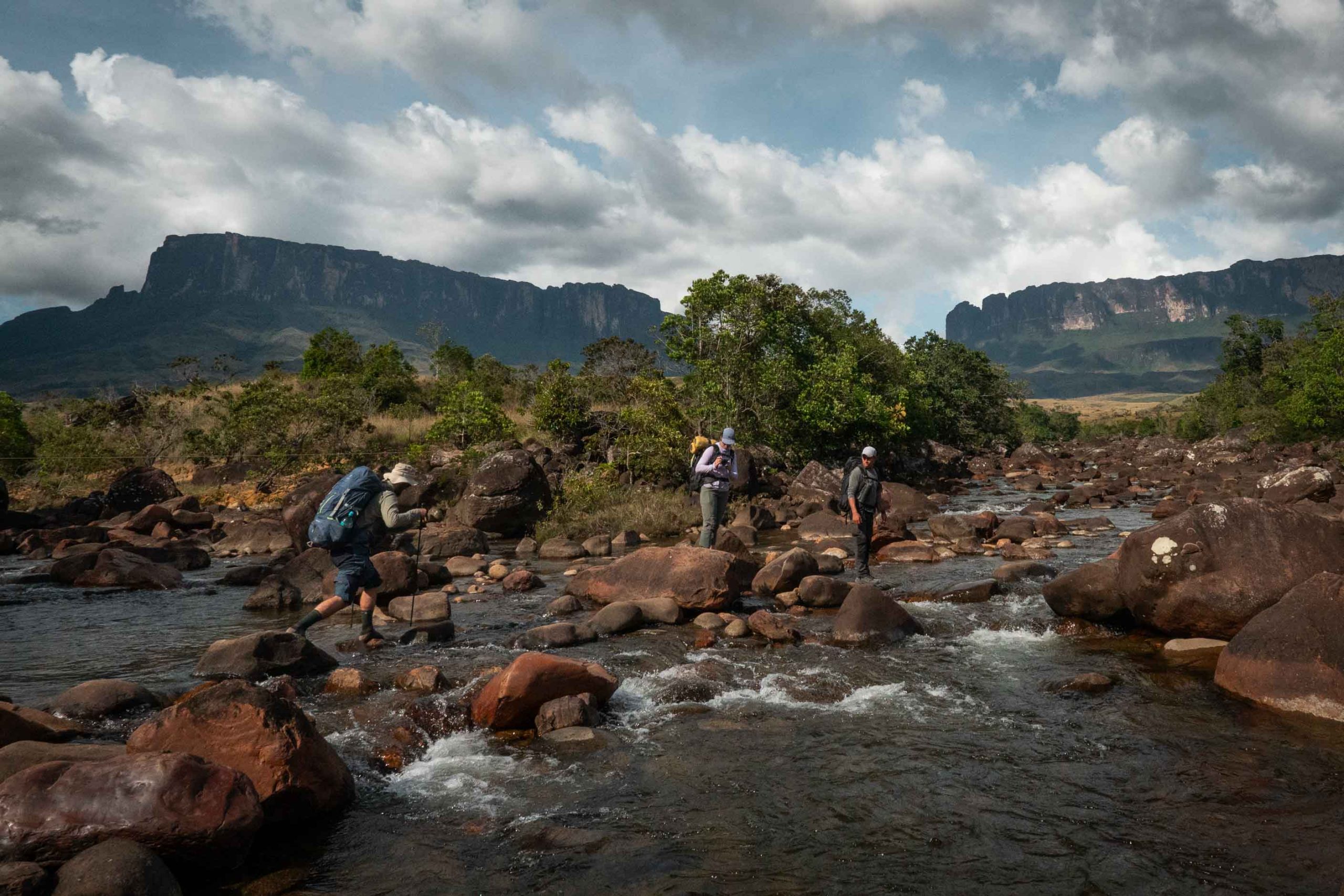
Participants trekking across river. Canaima, Venezuela. Photo: Nahua Expeditions
Why Mount Roraima?
Very few places in the world offer what Roraima offers: genuine remoteness, extraordinary biological uniqueness, and a trek that is demanding but achievable for experienced hikers in. It’s not overrun with tourists. It’s not a checkbox photo destination. The summit plateau — a moonscape of black rocks, crystal pools, and permanent cloud — is a place that rewires how you think about the natural world.
Some reasons hikers travel from around the globe to stand on this mountain:
Unique biodiversity. The isolation of the plateau has produced endemic species of flora and fauna found nowhere else — including the Oreophrynella quelchii (the Roraima black frog) and dozens of carnivorous plant species adapted to the nutrient-poor quartzite soils.
The summit plateau. Unlike most mountains where the summit is a peak, Roraima’s top is a vast plateau of roughly 31 square kilometres (19 mi). It is a world of itself — one you can spend days exploring, with distinct micro-environments, cave systems, and sweeping views across Venezuela, Brazil, and Guyana.
Indigenous history and culture. The Pemón people have inhabited the Gran Sabana for generations. Their relationship with the tepuis — spiritual, practical, and ecological — is something you encounter throughout this journey, from the villages we pass through to the stories carried by our local guides.
Exclusivity. This is not a day hike. The approach alone takes two full days of trekking. The relative difficulty of the expedition keeps visitation numbers low, meaning those who make it to the summit experience it in its most raw form.
Roraima during a morning cloud inversion. Taken from Guyana.
The Nahua Expeditions Trip
At a Glance
Duration
12 days
Price
$2995 USD per person
Trek Distance
~80 km (~50mi) total round trip
Altitude
1300m (4300ft) (trailhead) to 2300m (7500ft) (summit plateau)
Day 1 — Group Orientation, Boa Vista, Brazil. The trip kicks off at 10:30AM at the Aipana Plaza Hotel in downtown Boa Vista. After meeting fellow group members and receiving a full expedition briefing, we head to a nearby grocery store to pick up snacks and any last-minute items for the trek ahead. The afternoon is free for a final repack before an early departure the next morning. The day ends with dinner at a Brazilian Picanha restaurant and açaí on the way back to the hotel. Meal included: Dinner
Day 2 — Border Crossing & Transfer to Venezuela. We depart at 7:00AM by private shuttle for Pacaraima, a four-hour drive to the Brazil-Venezuela border. Any luggage not needed on the expedition stays in secure storage at Hotel Aipana. After crossing, we continue another three hours by 4×4 to the small indigenous village where we spend the night — with our first distant views of Monte Roraima on arrival. The evening ends with a traditional home-cooked dinner at the home of the Ayuso family, who will be our porters throughout the expedition. Meals included: Breakfast, Lunch, Dinner
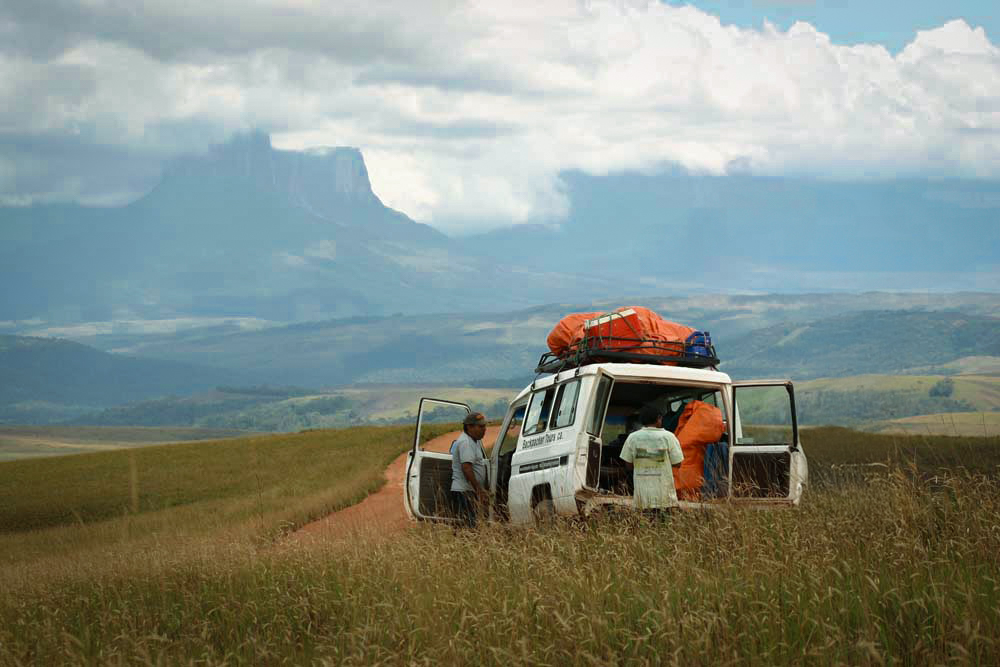
Crew en-route to Paraitepuy in the Gran Sabana with Roraima and Kukenan in the background.
Day 3 — Trek to Roraima Base Camp. An early 5:30AM breakfast kicks off our first full day on foot. Motorbikes shuttle us to the trailhead at approximately the 4km (2.5mi) mark, where the hike begins in. From there, we cover roughly 14km (8.7mi) through the Gran Sabana, crossing two rivers along the way as Roraima and Kukenan Tepui grow steadily larger on the horizon. The final two hours bring steeper terrain as we gain 1,000m (3,281ft) of elevation ascending the tepui’s foothills. Camp sits near the base of the wall we’ll scale the following morning. Meal included: Breakfast
Day 4 — Summit Roraima Tepui. Today’s hiking distance is just 2.8km (1.7mi) — but don’t let that fool you. The ascent will take us roughly six hours, threading through lush jungle tunnels, past creek outflows, with photography stops at extraordinary lookout points along the way. Depending on overnight rain, part of the trail may pass directly beneath a waterfall. Once on the summit plateau, we take our first look off the edge into the abyss, then walk 25 minutes to camp — set close to clear pools perfect for swimming, and within easy reach of the plateau’s best cloud-inversion viewpoints.
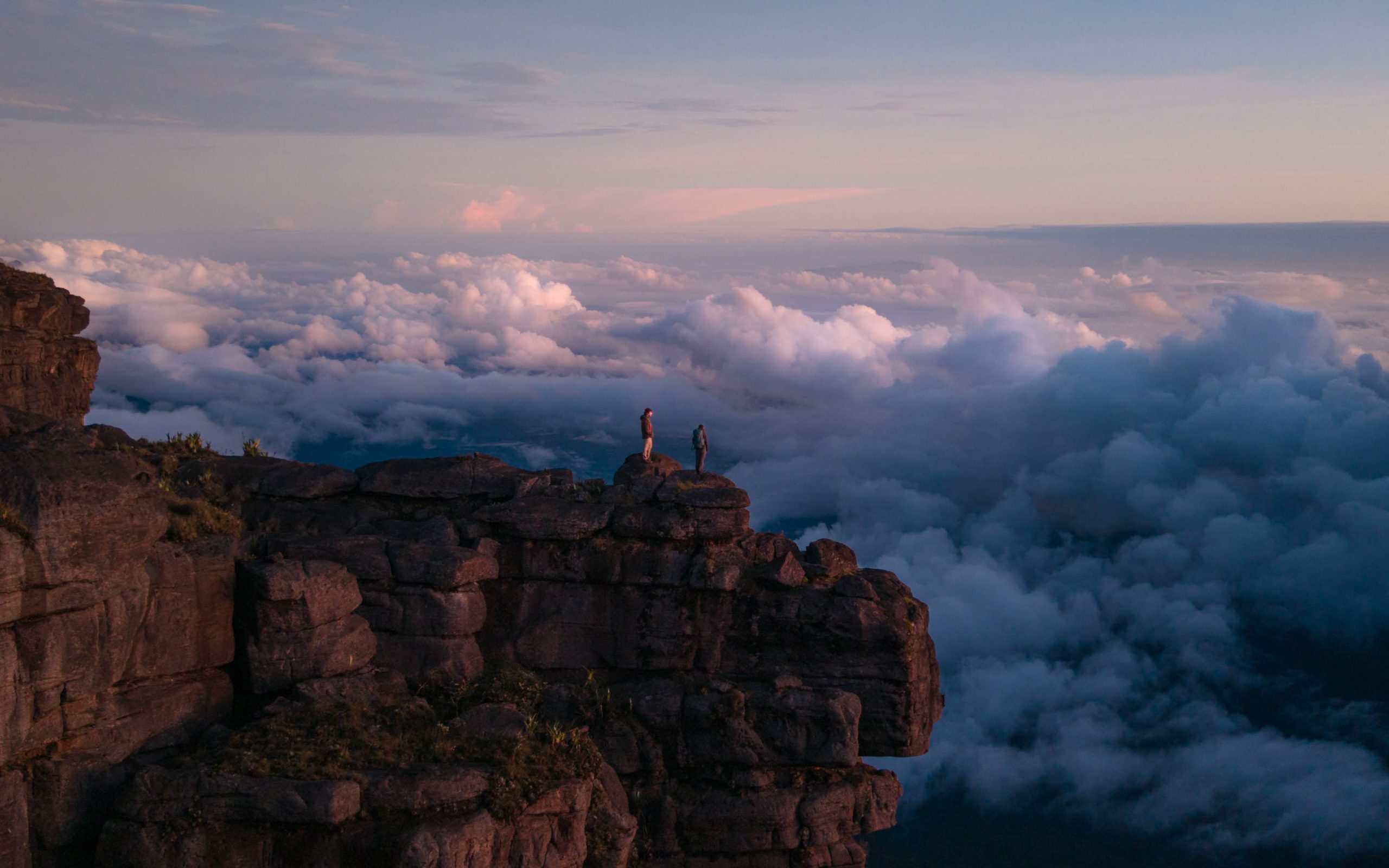
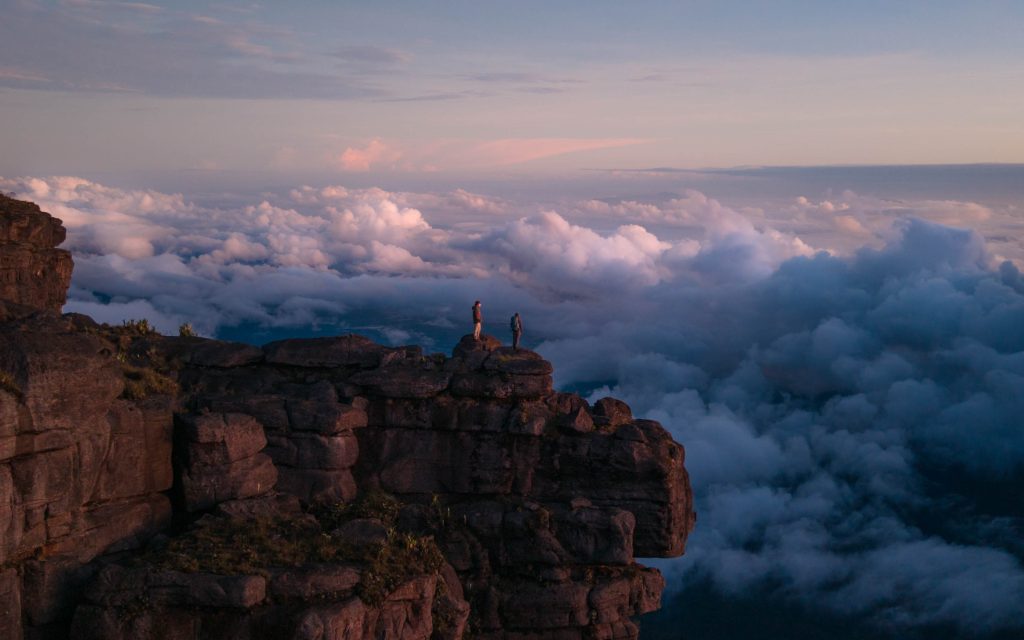
Participants overlooking the abyss at sunset. Photo: Nahua Expeditions
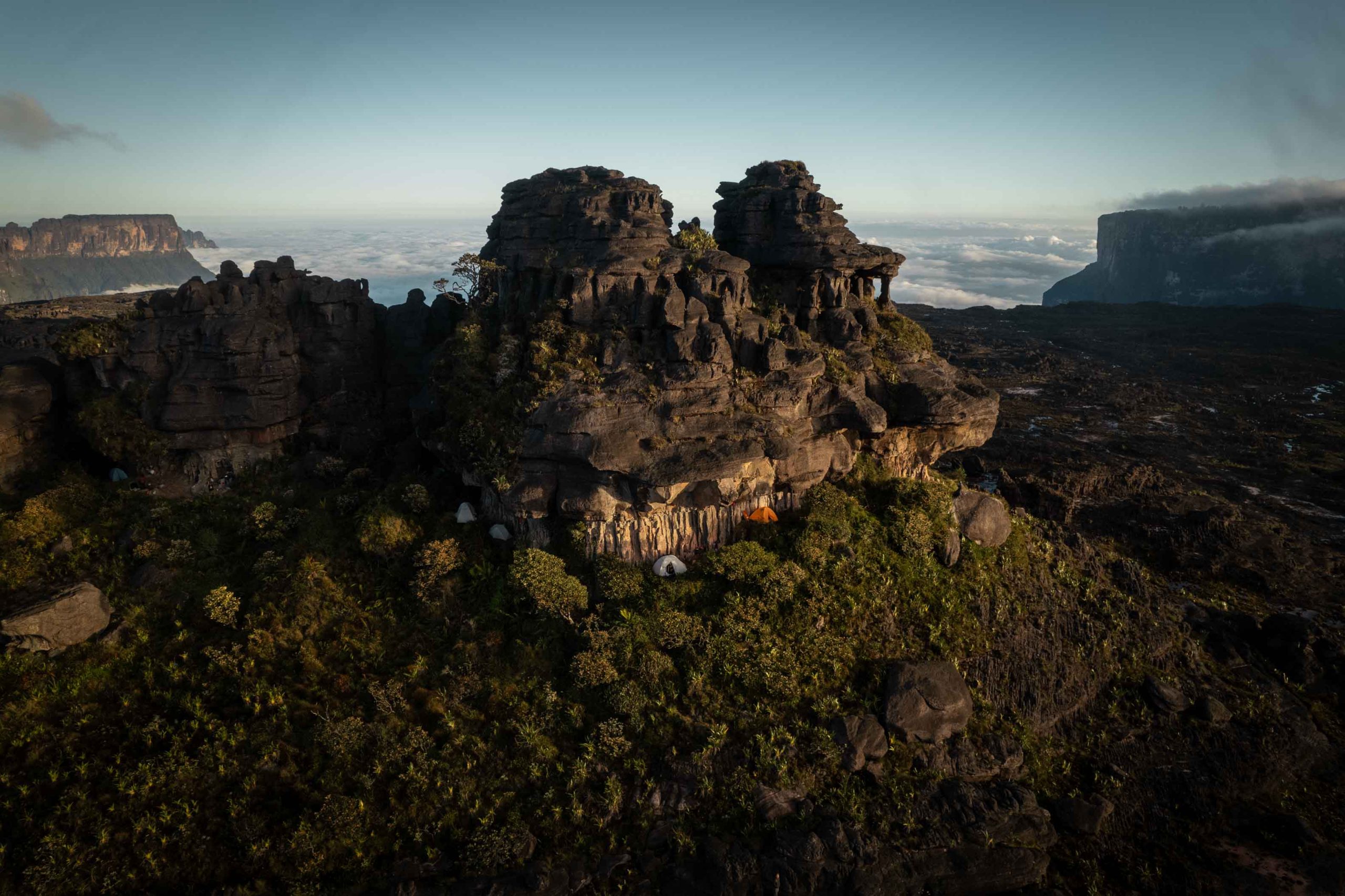
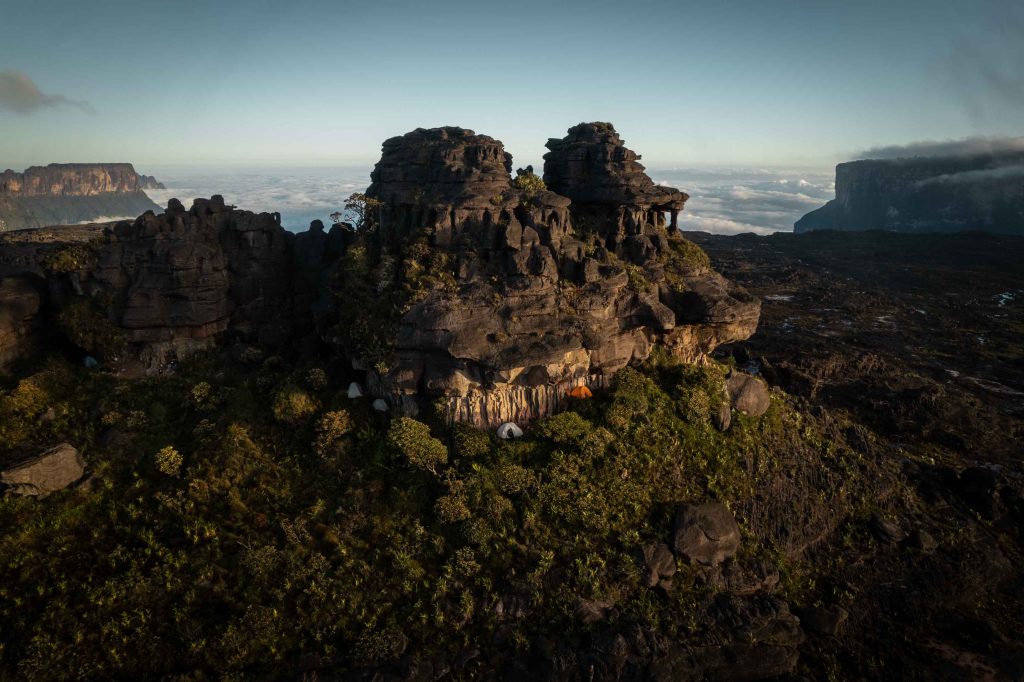
Days 5–9 — Exploration Days on the Plateau. Five full days atop Roraima’s summit plateau, with six nights total spent on the mountain. Plans shift daily based on weather and conditions. Highlights include crystal gardens, sandstone caves with underground water systems, swimming holes, dramatic ledge lookouts, and the tripoint border of Venezuela, Brazil, and Guyana. Our group holds special permits to cross into the Brazilian and Guyanese sides of the mountain — accessing locations that have rarely been photographed. Daily distances range from 5km (3.1mi) on lighter days to 14km (8.7mi) on the longest, across largely flat rocky terrain with small streams and the occasional scramble.
Day 10 — Descent to Rio Tek Camp. An easy morning before we say goodbye to the plateau and begin our descent at around 10:00AM. The route down moves quickly — steep, continuous downhill terrain back to Base Camp, arriving around noon for a lunch break. We then push on through the same two river crossings from Day 3, reaching Rio Tek Camp shortly after. Total distance: 14km (8.7mi) in roughly six hours.
Day 11 — Return to Boa Vista, Brazil. Our final morning with Roraima in view. After breakfast, motorbikes pick us up at 7:00AM and return us to the indigenous village for a sign-out with local authorities. We then drive back across the border into Brazil — stopping for lunch along the way — arriving in Boa Vista at approximately 4:00PM. Luggage retrieved from Hotel Aipana storage, showers, a tasty group dinner, and a well-earned açaí. Meals included: Lunch, Dinner
Day 12 — Departures. The expedition ends in Boa Vista. Our team arranges airport transfers based on each person’s flight schedule. Those continuing to explore the region are welcome to consult with trip leaders for recommendations.
Mount Roraima from base camp.
What's Included
Guide services, hotel accommodations in Boa Vista, meals as indicated in the itinerary, expedited border crossing into Venezuela, personalized 1-on-1 planning calls with expedition leaders, private shuttles to the Venezuelan border, 4×4 vehicle transports in Venezuela, motorbike transports on the Gran Sabana, porter services, indigenous community permits, accommodation in village huts, access to exclusive locations on the plateau, Parque Nacional Canaima entrance fee, professional photos and videos of the trip, a home dinner with a local Taurepang family, ultralight cookstoves and fuel, luggage storage during the expedition, and a dedicated waste management crew.
What's Not Included
International airfare, travel and rescue insurance, personal gear, and dehydrated trail meals (food items on trek).
What to Expect on the Trek
Difficulty
This expedition is rated moderate to strenuous. Participants should be physically fit and comfortable with multiple hours of hiking per day on varying terrain. We’ve written an in-depth training guide to help participants physically prepare for Mount Roraima.
On the expedition, the first two days of the trail are the longest, covering the approach to the summit. Terrain ranges from open savannah paths to steep rocky ascents and off-trail sections across muddy or uneven ground. Plateau days are generally shorter, with options adjusted based on group preference and conditions.
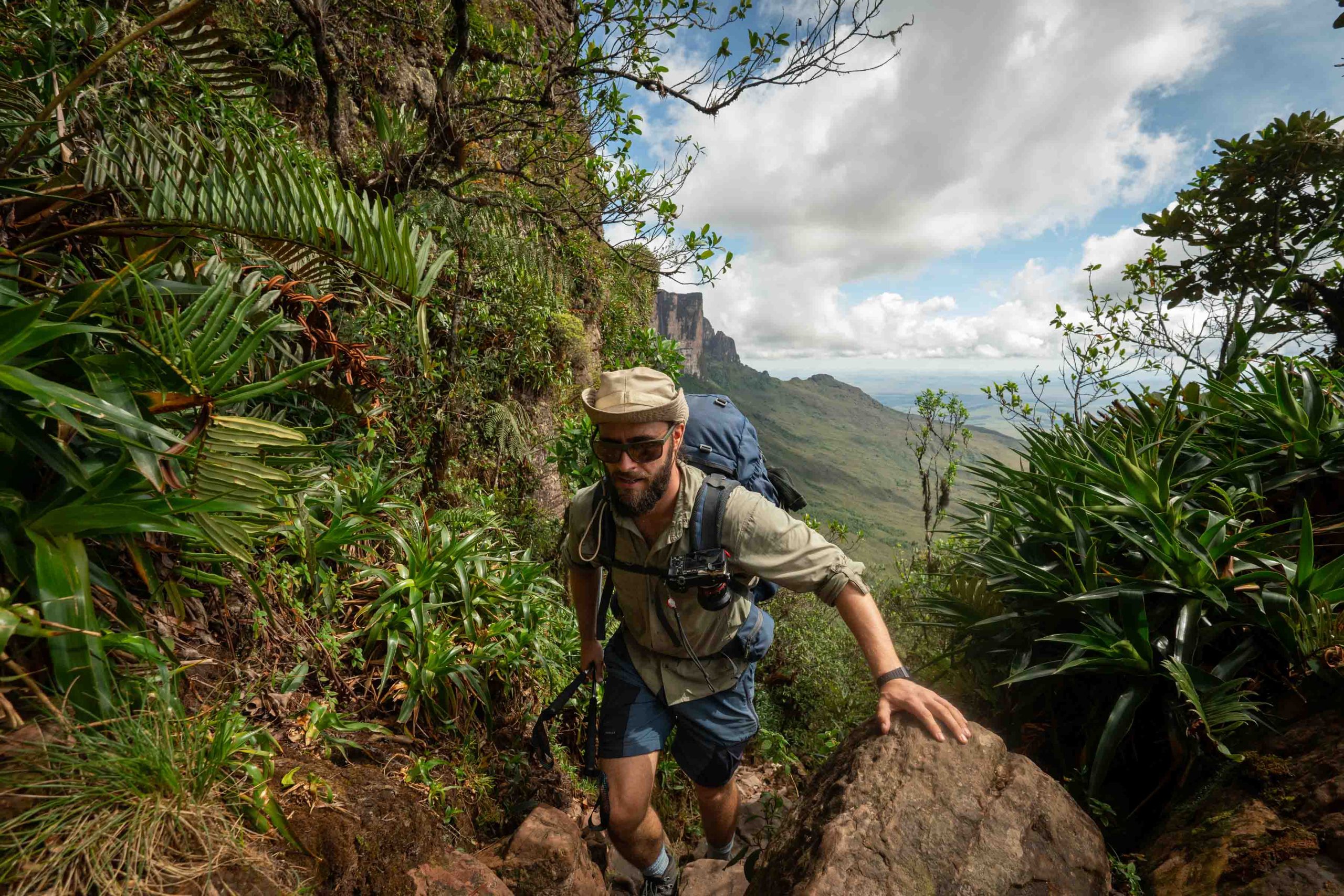
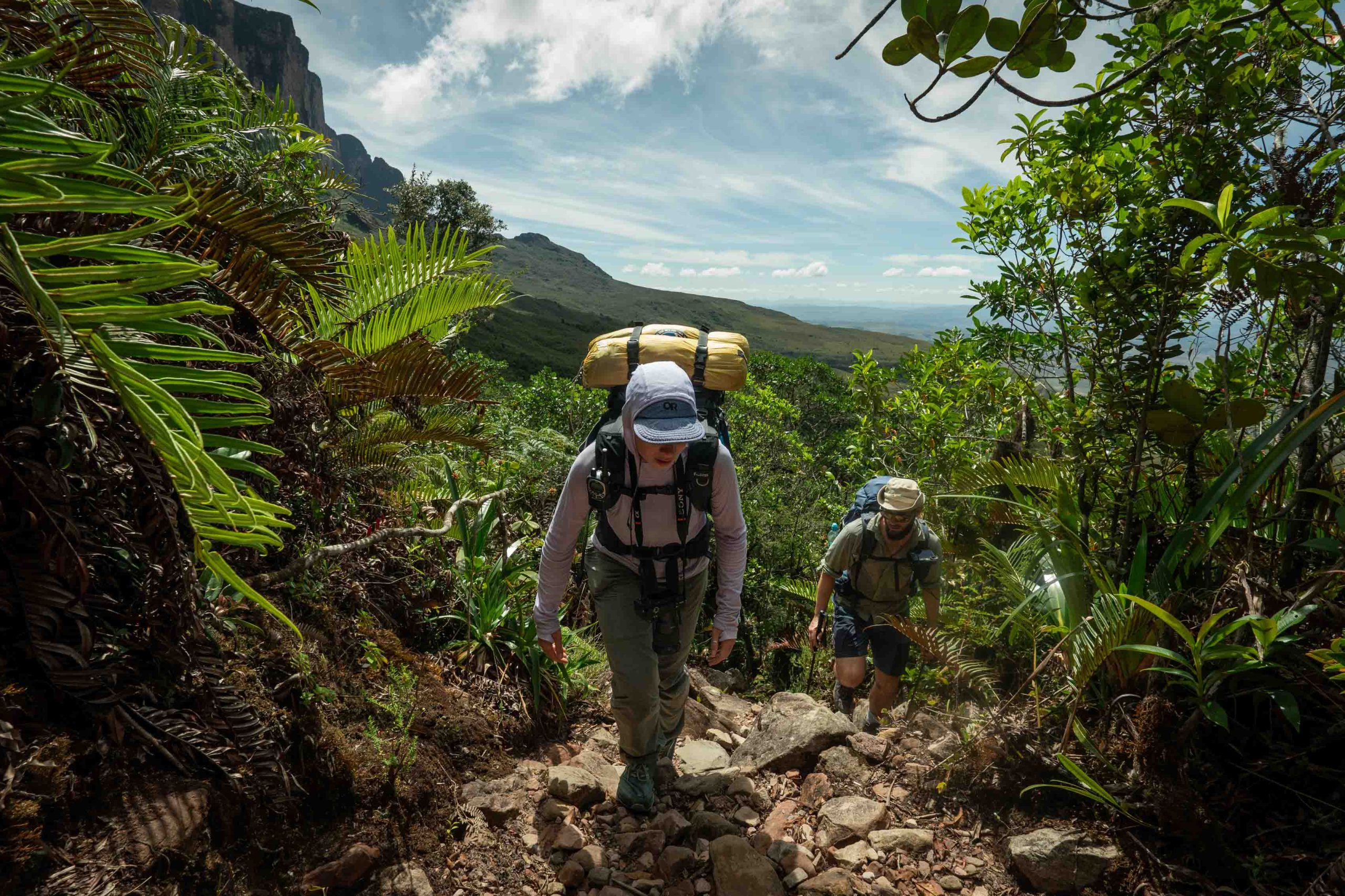
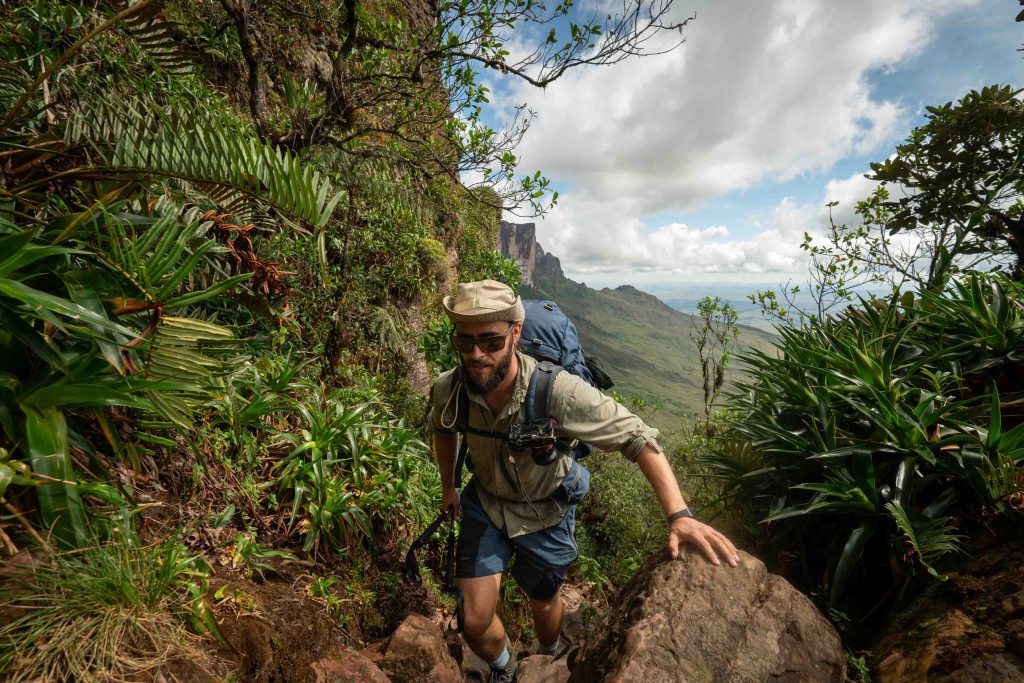
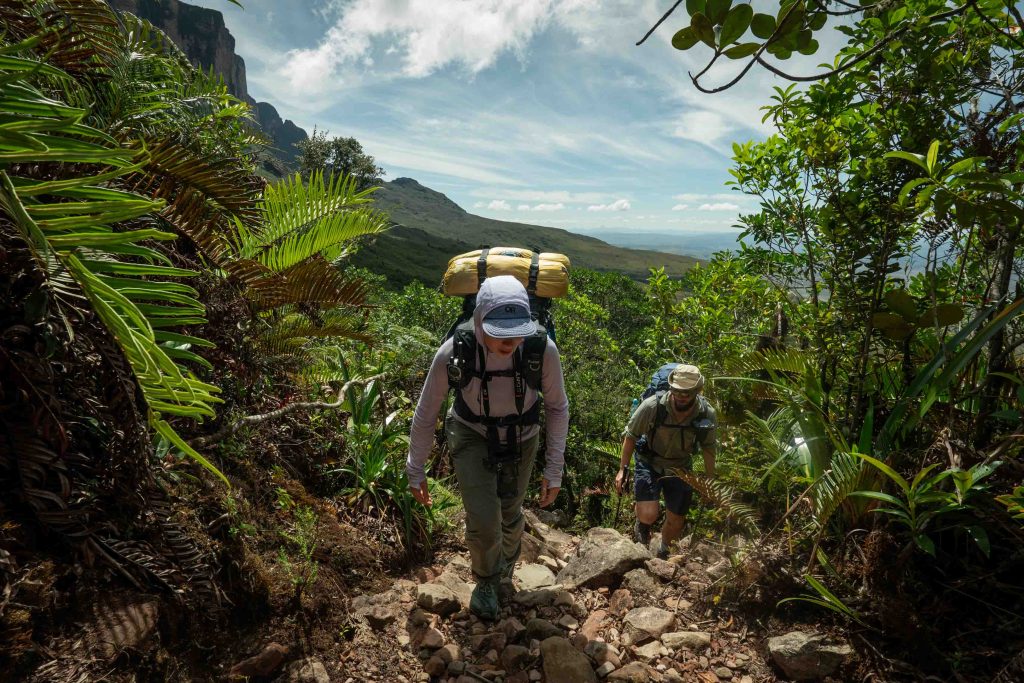
Participant, Joel, ascending Mount Roraima on Day 4 of our expedition. Photo: Nahua Expeditions
Skill prerequisites: solid physical fitness, prior multi-day hiking experience, and a tolerance for discomfort.
Weather
Temperatures in the Gran Sabana typically range from 20–30°C (68–86°F) during the day. On the plateau, conditions are cooler and more variable — evenings and nights can drop to around 7–10°C (44–50°F) or lower. The mountain effectively generates its own weather; clear skies can give way to torrential rain quickly. We trek during the dry season to maximize fair-weather days, but all participants should be prepared for both warm and cold conditions.
Food
Participants bring 16 freeze-dried backpacking meal pouches for the trek (brands such as Mountain House, Peak Refuel, or Backpackers Pantry). Read our articles on Backpacking Meals if you’re interested in learning more about this type of food on expeditions. Guides boil water for breakfast and dinner daily using MSR Whisperlite stoves. On Day 1, our group will visit a grocery store in Boa Vista to pick up supplementary snacks and lunch items. Several meals — including a home dinner with a Taurepang family — are included and prepared locally. Included meals are indicated in the trip itinerary.
Getting to Boa Vista
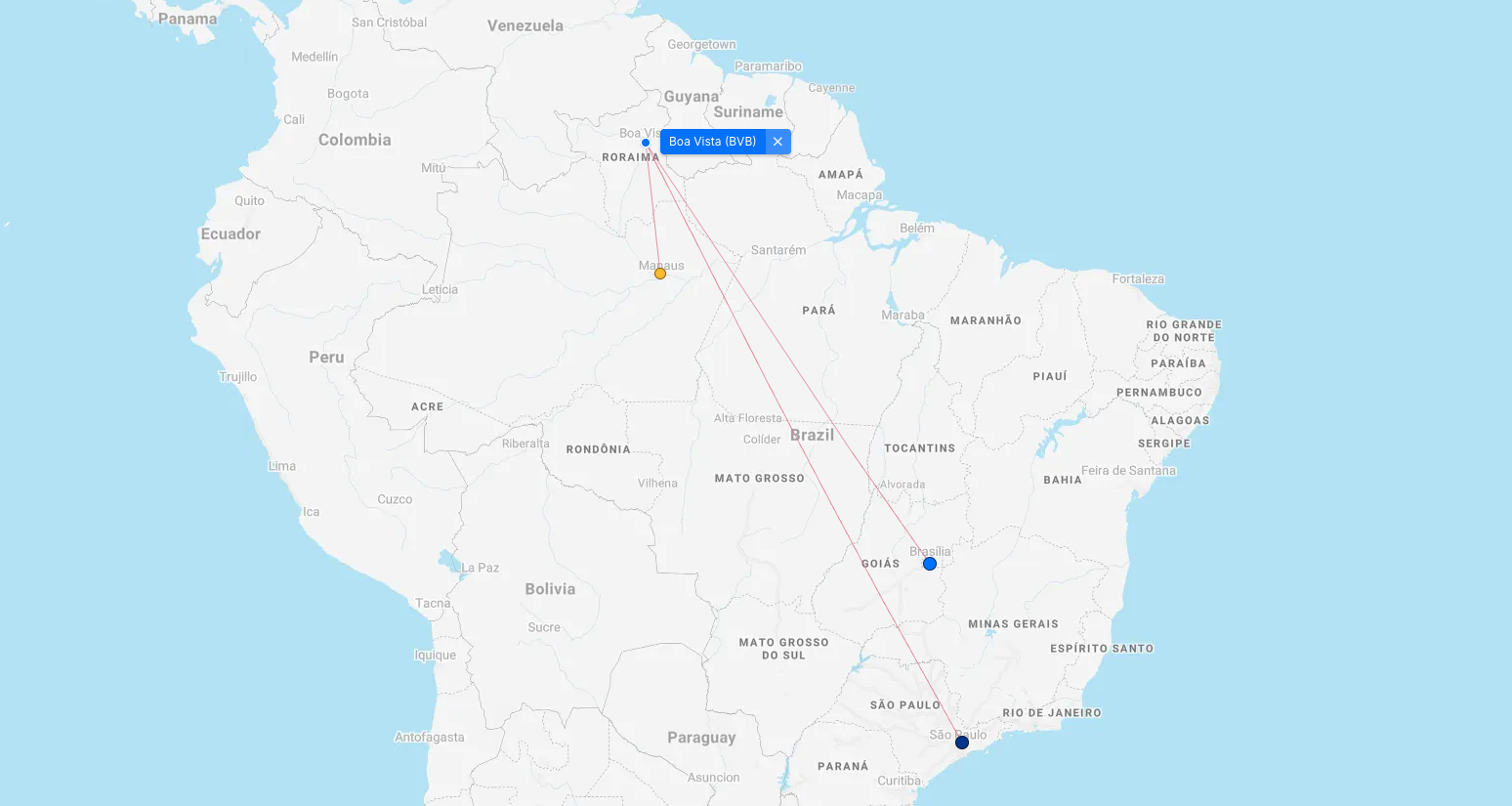
The expedition begins in Boa Vista, Roraima, Brazil — your final destination airport—unless arriving by land—is Aeroporto Internacional de Boa Vista – Atlas Brasil Cantanhede (BVB). Most international travellers connect through one of three Brazilian cities:
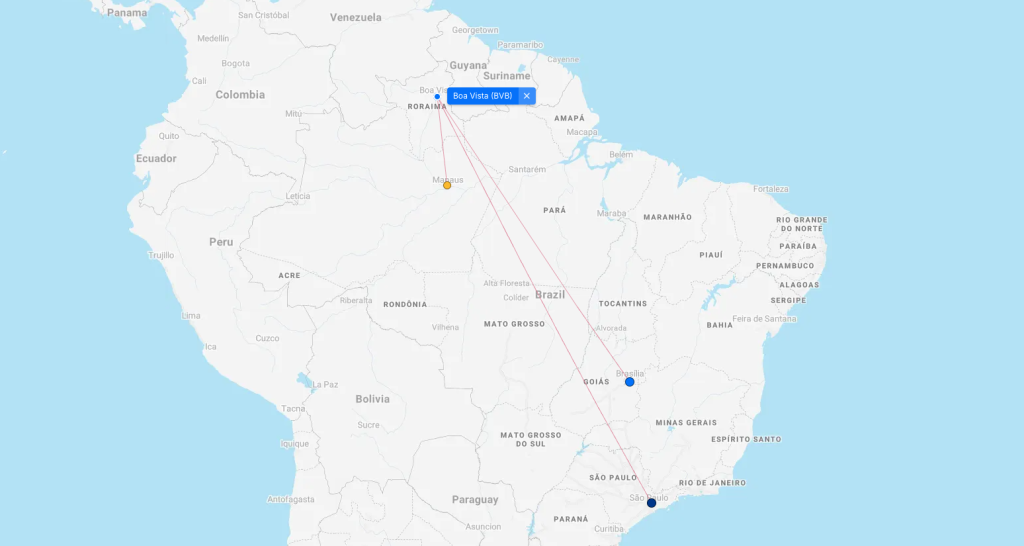
Direct flight routes to Boa Vista, Brazil. Source: Flight Connections
Via São Paulo — São Paulo’s Guarulhos International Airport (GRU) is among the world’s busiest and is easily accessible from most global destinations. LATAM Airlines offers direct flights from GRU to BVB twice weekly. Allow 3–4 hours minimum for immigration and baggage when transiting internationally. Note: travellers from North America will find São Paulo a significant southward detour — Manaus or Brasília are more practical.
Via Brasília (BSB) — Brasília receives non-stop flights from Lisbon, Miami, Bogotá, Buenos Aires, Panama City, and others. Book the Brasília-to-Boa Vista leg separately and in advance, as last-minute domestic fares in Brazil can be expensive.
Via Manaus (MAO) — Our top recommendation, especially for travellers from North America. Daily direct flights operate from Manaus to Boa Vista (Azul Airlines). North American travellers can often reach Manaus in just two Copa Airlines flights via Panama. Manaus is also within bus distance of Boa Vista via Eucatur’s comfortable Leito (reclining bed) service — an 11-hour bus ride for under $75 USD, and a solid budget option.
We strongly recommend arriving at least two full days before the expedition start date to account for travel delays. The Aipana Plaza Hotel in downtown Boa Vista is where we convene, and our team will coordinate airport pickup upon your arrival.
A detailed Getting to Boa Vista guide — including specific airline recommendations, booking strategies, and route-by-route tips — is available on our blog.
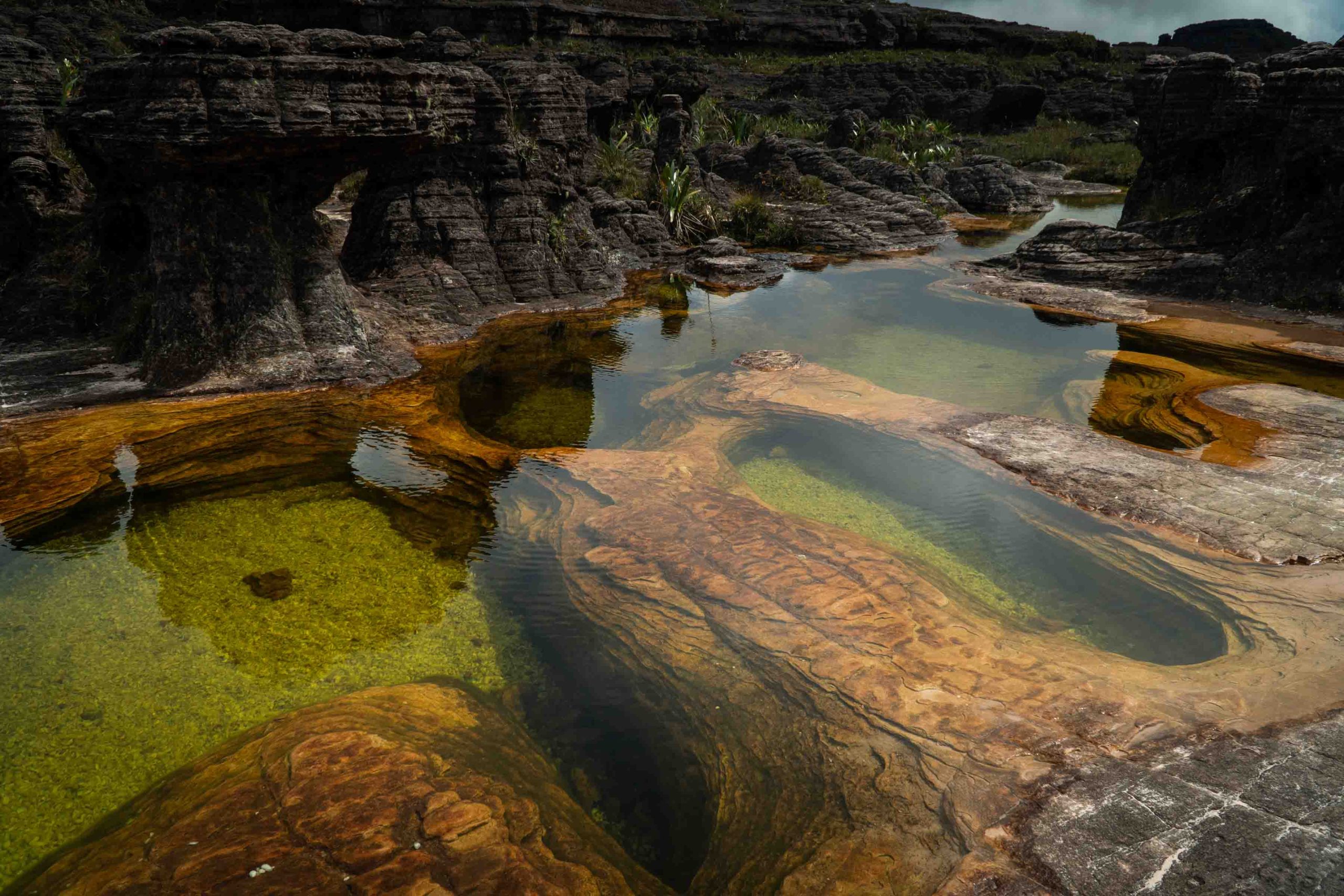
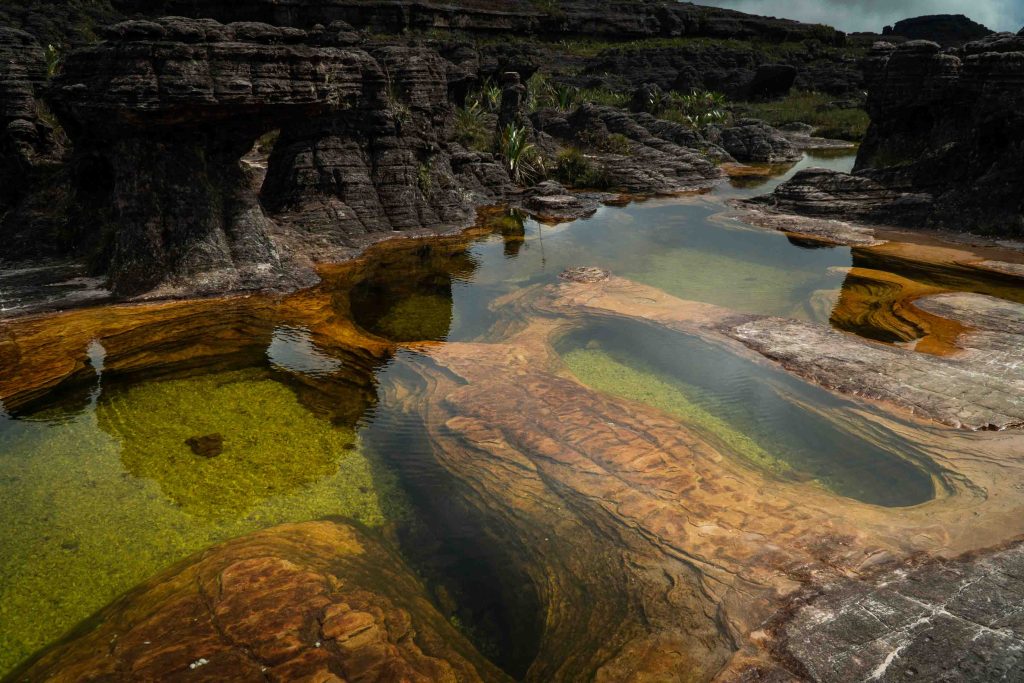
"The Jacuzzi" crystal pools on Mount Roraima. Photo: Nahua Expeditions
Safety: Our Commitment to Your Wellbeing
The safety of our group is Nahua Expeditions’ foremost priority — not a footnote, but the foundation on which every operational decision is made. We understand that Venezuela, as a destination, raises questions. Here is how we address them directly.
Understanding the region:Media coverage of Venezuela typically centres on the Colombia- Venezuela border and the capital, Caracas. The Canaima region — where this expedition takes place — is in the remote south-eastern corner of the country, geographically and politically isolated from those areas. The land is indigenous territory, home to the Pemón people, whose livelihoods depend on sustainable tourism. As one local on a recent expedition said: “Canaima is not representative of either Venezuela, nor Brazil. It’s like its own country. It has no influence from the rest of the country.”
Experienced local guides:Throughout every moment in Brazil and Venezuela, our group is accompanied by licensed, locally-rooted guides with nearly 35 years of professional experience in both tourism and search and rescue operations in this specific region. These are not generalist guides — they are regarded as among the most experienced and well-connected operators the Canaima area has to offer.
Vetted transportation and accommodation: All vehicle travel is handled through trusted local partners, with drivers instructed to maintain safe speeds at all times. Roads used are established highways. Hotels and accommodations meet high standards of cleanliness and reputation. Restaurants are selected based on consistent hygiene practices — no prior guests have experienced food-related illness on these trips.
Satellite communications and external support: Our expedition leaders carry multiple satellite communication devices throughout the journey. An external support team, based in multiple locations around the world, remains in continuous contact via satellite — aware of our exact location, itinerary, and schedule at all times. In the event of an emergency, this team serves as the first coordination point for activating the appropriate response.
Evacuation access: Our team maintains established working relationships with private helicopter and air taxi operators in both Santa Elena de Uairen, Venezuela, and Boa Vista, Brazil, should aerial evacuation ever be required.
Border crossing: We cross the Brazil-Venezuela border twice. Our team handles all logistics: paperwork, permits, and direct coordination with both Brazilian and Venezuelan immigration authorities. Group members are given priority processing — typically around 10 minutes for the full group — and are able to pass through without stopping at standard baggage and ID checkpoints. This is the result of years of relationship-building and operational experience at this specific crossing.
Rescue insurance: Nahua Expeditions strongly recommends that all participants carry wilderness rescue insurance for this expedition. We stand behind Global Rescue as the industry leader in travel and rescue coverage, and can provide guidance on coverage options upon booking.
These measures collectively represent a standard of care that goes well beyond the norm for expeditions of this type. We have refined them across multiple technically demanding environments, and we bring the same high standards to Roraima.
Participants hiking up to Roraima's plateau. Photo: Nahua Expeditions
Packing Essentials
A full packing list is provided to confirmed participants in our welcome PDF, but key items include:
A backpacking pack of 55–75L, a 3-season sleeping bag rated to at least 6°C(42°F), an ultralight tent (Big Agnes or MSR recommended), hiking / trekking poles, a sleeping pad, a water filter (standalone filter or bottle-filter), a lightweight rain shell and rain pants, a compressible insulated jacket, waterproof hiking footwear, river-crossable sandals, a headlamp with spare batteries, high-DEET insect repellent, and a valid Yellow Fever vaccination certificate (required for Venezuela entry and recommended for re-boarding flights out of Brazil).
Spots Are Limited
This is a small-group expedition by design. We keep group sizes intentionally limited to protect the experience, respect the environment, and maintain the safety and logistics standards we operate at.
If Mount Roraima has been on your list — and for the right kind of traveller, it should be — we encourage you to get in touch with us and enquire about our upcoming expeditions.
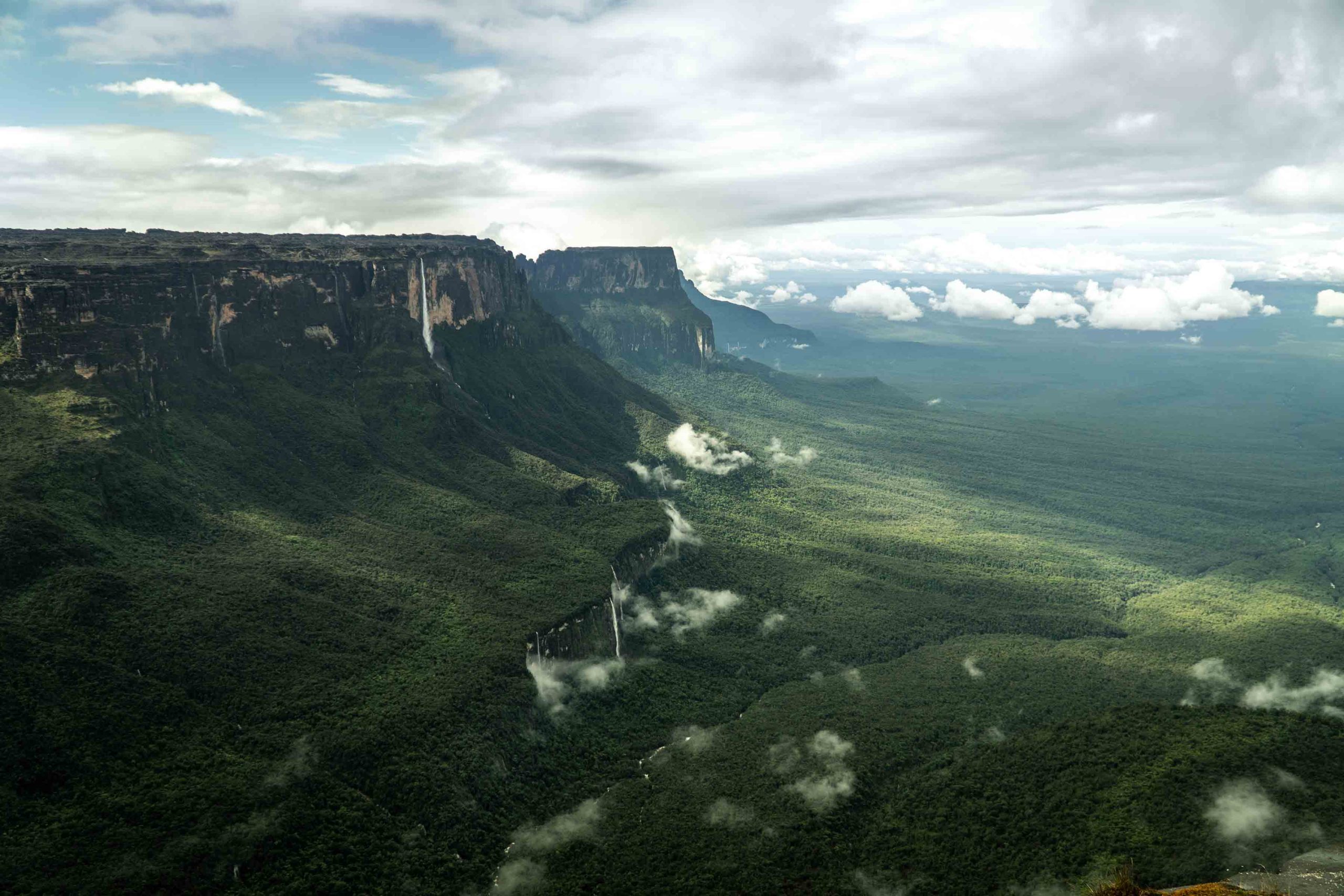
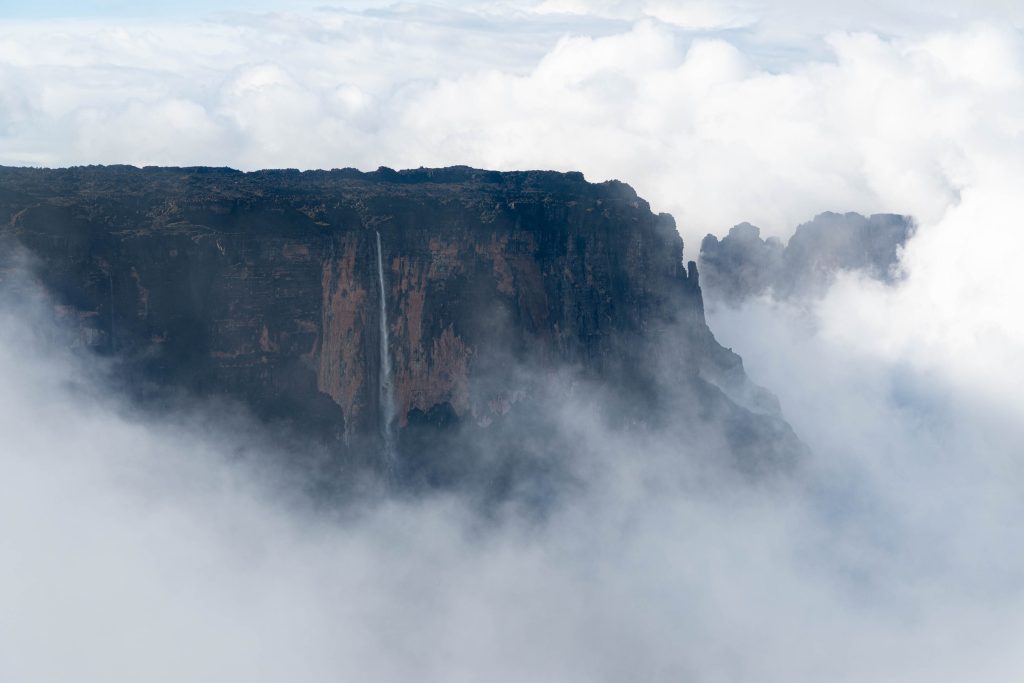
Waterfall on Kukenan tepui, from Roraima. Photo: Nahua Expeditions
What's Next?
If you’re looking to explore places on earth that few people have ever experienced, Nahua Expeditionsrun trips that will challenge you, inspire you, and leave you with stories for a lifetime. Whether it’s navigating remote regions, pushing past your limits, or forging connections in the wild—we’re here to make it happen.
Exploration and conservation are inseparable at Nahua Expeditions. Every trip we run is built around minimizing our environmental footprint, employing local people, and supporting conservation initiatives in the regions we travel through. When you travel with Nahua, your trip helps ensure these places endure. Learn more about our conservation work ➔
Mount Roraima Trekking Expedition: Venezuela’s Lost World
There are mountains, and then there is Mount Roraima. Rising nearly 2,300m (7,545ft) from the savannahs of the Gran Sabana, this ancient tepui in southern Venezuela is one of the most extraordinary places on Earth — a flat-topped sandstone plateau draped in mist, populated by species found nowhere else in the world, and steeped in indigenous legend stretching back thousands of years. Sir Arthur Conan Doyle used it as the inspiration for The Lost World. It sits at the tripoint of Venezuela, Brazil, and Guyana, as if belonging to none and all of them at once.
21 NOV 2025 ・ 15 min read
Nahua Expeditions
A person overlooking a distant waterfall on our Mount Roraima Expedition. Photo: Nahua Expeditions
We are proud to announce that Nahua Expeditions is running a guided 12-day trek to the summit of Mount Roraima. This is an expedition built for serious adventure hikers who want to experience one of South America’s most remote and remarkable landscapes — done properly, safely, and at a depth most visitors never reach.
Mount Roraima is the tallest of the tepuis — the ancient table-top mountains that define the Gran Sabana landscape of Venezuela’s Bolívar state, part of Canaima National Park, a UNESCO World Heritage Site. The word “tepui” comes from the Pemón indigenous language and translates roughly to “house of the gods.” Roraima, at its summit plateau, earns that name.
Roraima Tepui aerial image, facing south from Guyana
Geologically, the tepuis are among the oldest rock formations on the planet — Precambrian sandstone estimated to be nearly 1.8 billion years old. For much of Earth’s history, the summit of Roraima was isolated from the surrounding lowlands, which gave rise to a remarkable degree of endemism—where species don’t exist anywhere else in the world. The plateau is home to carnivorous plants, black frogs, endemic bromeliads, and crystal quartz formations that look like you’re in a sci-fi novel on another planet.
The Gran Sabana below is equally spectacular — a sweeping highland savannah punctuated by waterfalls, rivers, and the dramatic vertical walls of surrounding tepuis. Hiking through it to reach Roraima’s base is an experience in itself.
Participants trekking across river. Canaima, Venezuela. Photo: Nahua Expeditions
Why Mount Roraima?
Very few places in the world offer what Roraima offers: genuine remoteness, extraordinary biological uniqueness, and a trek that is demanding but achievable for experienced hikers in. It’s not overrun with tourists. It’s not a checkbox photo destination. The summit plateau — a moonscape of black rocks, crystal pools, and permanent cloud — is a place that rewires how you think about the natural world.
Some reasons hikers travel from around the globe to stand on this mountain:
Unique biodiversity. The isolation of the plateau has produced endemic species of flora and fauna found nowhere else — including the Oreophrynella quelchii (the Roraima black frog) and dozens of carnivorous plant species adapted to the nutrient-poor quartzite soils.
The summit plateau. Unlike most mountains where the summit is a peak, Roraima’s top is a vast plateau of roughly 31 square kilometres (19 mi). It is a world of itself — one you can spend days exploring, with distinct micro-environments, cave systems, and sweeping views across Venezuela, Brazil, and Guyana.
Indigenous history and culture. The Pemón people have inhabited the Gran Sabana for generations. Their relationship with the tepuis — spiritual, practical, and ecological — is something you encounter throughout this journey, from the villages we pass through to the stories carried by our local guides.
Exclusivity. This is not a day hike. The approach alone takes two full days of trekking. The relative difficulty of the expedition keeps visitation numbers low, meaning those who make it to the summit experience it in its most raw form.
Roraima during a morning cloud inversion. Taken from Guyana.
The Nahua Expeditions Trip
At a Glance
Duration
12 days
Price
$2995 USD per person
Trek Distance
~80 km (~50mi) total round trip
Altitude
1300m (4300ft) (trailhead) to 2300m (7500ft) (summit plateau)
Day 1 — Group Orientation, Boa Vista, Brazil. The trip kicks off at 10:30AM at the Aipana Plaza Hotel in downtown Boa Vista. After meeting fellow group members and receiving a full expedition briefing, we head to a nearby grocery store to pick up snacks and any last-minute items for the trek ahead. The afternoon is free for a final repack before an early departure the next morning. The day ends with dinner at a Brazilian Picanha restaurant and açaí on the way back to the hotel. Meal included: Dinner
Day 2 — Border Crossing & Transfer to Venezuela. We depart at 7:00AM by private shuttle for Pacaraima, a four-hour drive to the Brazil-Venezuela border. Any luggage not needed on the expedition stays in secure storage at Hotel Aipana. After crossing, we continue another three hours by 4×4 to the small indigenous village where we spend the night — with our first distant views of Monte Roraima on arrival. The evening ends with a traditional home-cooked dinner at the home of the Ayuso family, who will be our porters throughout the expedition. Meals included: Breakfast, Lunch, Dinner
Crew en-route to Paraitepuy in the Gran Sabana with Roraima and Kukenan in the background.
Day 3 — Trek to Roraima Base Camp. An early 5:30AM breakfast kicks off our first full day on foot. Motorbikes shuttle us to the trailhead at approximately the 4km (2.5mi) mark, where the hike begins in. From there, we cover roughly 14km (8.7mi) through the Gran Sabana, crossing two rivers along the way as Roraima and Kukenan Tepui grow steadily larger on the horizon. The final two hours bring steeper terrain as we gain 1,000m (3,281ft) of elevation ascending the tepui’s foothills. Camp sits near the base of the wall we’ll scale the following morning. Meal included: Breakfast
Day 4 — Summit Roraima Tepui. Today’s hiking distance is just 2.8km (1.7mi) — but don’t let that fool you. The ascent will take us roughly six hours, threading through lush jungle tunnels, past creek outflows, with photography stops at extraordinary lookout points along the way. Depending on overnight rain, part of the trail may pass directly beneath a waterfall. Once on the summit plateau, we take our first look off the edge into the abyss, then walk 25 minutes to camp — set close to clear pools perfect for swimming, and within easy reach of the plateau’s best cloud-inversion viewpoints.
Participants overlooking the abyss at sunset. Photo: Nahua Expeditions
Days 5–9 — Exploration Days on the Plateau. Five full days atop Roraima’s summit plateau, with six nights total spent on the mountain. Plans shift daily based on weather and conditions. Highlights include crystal gardens, sandstone caves with underground water systems, swimming holes, dramatic ledge lookouts, and the tripoint border of Venezuela, Brazil, and Guyana. Our group holds special permits to cross into the Brazilian and Guyanese sides of the mountain — accessing locations that have rarely been photographed. Daily distances range from 5km (3.1mi) on lighter days to 14km (8.7mi) on the longest, across largely flat rocky terrain with small streams and the occasional scramble.
Day 10 — Descent to Rio Tek Camp. An easy morning before we say goodbye to the plateau and begin our descent at around 10:00AM. The route down moves quickly — steep, continuous downhill terrain back to Base Camp, arriving around noon for a lunch break. We then push on through the same two river crossings from Day 3, reaching Rio Tek Camp shortly after. Total distance: 14km (8.7mi) in roughly six hours.
Day 11 — Return to Boa Vista, Brazil. Our final morning with Roraima in view. After breakfast, motorbikes pick us up at 7:00AM and return us to the indigenous village for a sign-out with local authorities. We then drive back across the border into Brazil — stopping for lunch along the way — arriving in Boa Vista at approximately 4:00PM. Luggage retrieved from Hotel Aipana storage, showers, a tasty group dinner, and a well-earned açaí. Meals included: Lunch, Dinner
Day 12 — Departures. The expedition ends in Boa Vista. Our team arranges airport transfers based on each person’s flight schedule. Those continuing to explore the region are welcome to consult with trip leaders for recommendations.
Mount Roraima from base camp.
What's Included
Guide services, hotel accommodations in Boa Vista, meals as indicated in the itinerary, expedited border crossing into Venezuela, personalized 1-on-1 planning calls with expedition leaders, private shuttles to the Venezuelan border, 4×4 vehicle transports in Venezuela, motorbike transports on the Gran Sabana, porter services, indigenous community permits, accommodation in village huts, access to exclusive locations on the plateau, Parque Nacional Canaima entrance fee, professional photos and videos of the trip, a home dinner with a local Taurepang family, ultralight cookstoves and fuel, luggage storage during the expedition, and a dedicated waste management crew.
What's Not Included
International airfare, travel and rescue insurance, personal gear, and dehydrated trail meals (food items on trek).
What to Expect on the Trek
Difficulty
This expedition is rated moderate to strenuous. Participants should be physically fit and comfortable with multiple hours of hiking per day on varying terrain. We’ve written an in-depth training guide to help participants physically prepare for Mount Roraima.
On the expedition, the first two days of the trail are the longest, covering the approach to the summit. Terrain ranges from open savannah paths to steep rocky ascents and off-trail sections across muddy or uneven ground. Plateau days are generally shorter, with options adjusted based on group preference and conditions.
Participant, Joel, ascending Mount Roraima on Day 4 of our expedition. Photo: Nahua Expeditions
Skill prerequisites: solid physical fitness, prior multi-day hiking experience, and a tolerance for discomfort.
Weather
Temperatures in the Gran Sabana typically range from 20–30°C (68–86°F) during the day. On the plateau, conditions are cooler and more variable — evenings and nights can drop to around 7–10°C (44–50°F) or lower. The mountain effectively generates its own weather; clear skies can give way to torrential rain quickly. We trek during the dry season to maximize fair-weather days, but all participants should be prepared for both warm and cold conditions.
Food
Participants bring 16 freeze-dried backpacking meal pouches for the trek (brands such as Mountain House, Peak Refuel, or Backpackers Pantry). Read our articles on Backpacking Meals if you’re interested in learning more about this type of food on expeditions. Guides boil water for breakfast and dinner daily using MSR Whisperlite stoves. On Day 1, our group will visit a grocery store in Boa Vista to pick up supplementary snacks and lunch items. Several meals — including a home dinner with a Taurepang family — are included and prepared locally. Included meals are indicated in the trip itinerary.
Getting to Boa Vista
The expedition begins in Boa Vista, Roraima, Brazil — your final destination airport—unless arriving by land—is Aeroporto Internacional de Boa Vista – Atlas Brasil Cantanhede (BVB). Most international travellers connect through one of three Brazilian cities:
Direct flight routes to Boa Vista, Brazil. Source: Flight Connections
Via São Paulo — São Paulo’s Guarulhos International Airport (GRU) is among the world’s busiest and is easily accessible from most global destinations. LATAM Airlines offers direct flights from GRU to BVB twice weekly. Allow 3–4 hours minimum for immigration and baggage when transiting internationally. Note: travellers from North America will find São Paulo a significant southward detour — Manaus or Brasília are more practical.
Via Brasília (BSB) — Brasília receives non-stop flights from Lisbon, Miami, Bogotá, Buenos Aires, Panama City, and others. Book the Brasília-to-Boa Vista leg separately and in advance, as last-minute domestic fares in Brazil can be expensive.
Via Manaus (MAO) — Our top recommendation, especially for travellers from North America. Daily direct flights operate from Manaus to Boa Vista (Azul Airlines). North American travellers can often reach Manaus in just two Copa Airlines flights via Panama. Manaus is also within bus distance of Boa Vista via Eucatur’s comfortable Leito (reclining bed) service — an 11-hour bus ride for under $75 USD, and a solid budget option.
We strongly recommend arriving at least two full days before the expedition start date to account for travel delays. The Aipana Plaza Hotel in downtown Boa Vista is where we convene, and our team will coordinate airport pickup upon your arrival.
A detailed Getting to Boa Vista guide — including specific airline recommendations, booking strategies, and route-by-route tips — is available on our blog.
"The Jacuzzi" crystal pools on Mount Roraima. Photo: Nahua Expeditions
Safety: Our Commitment to Your Wellbeing
The safety of our group is Nahua Expeditions’ foremost priority — not a footnote, but the foundation on which every operational decision is made. We understand that Venezuela, as a destination, raises questions. Here is how we address them directly.
Understanding the region:Media coverage of Venezuela typically centres on the Colombia- Venezuela border and the capital, Caracas. The Canaima region — where this expedition takes place — is in the remote south-eastern corner of the country, geographically and politically isolated from those areas. The land is indigenous territory, home to the Pemón people, whose livelihoods depend on sustainable tourism. As one local on a recent expedition said: “Canaima is not representative of either Venezuela, nor Brazil. It’s like its own country. It has no influence from the rest of the country.”
Experienced local guides:Throughout every moment in Brazil and Venezuela, our group is accompanied by licensed, locally-rooted guides with nearly 35 years of professional experience in both tourism and search and rescue operations in this specific region. These are not generalist guides — they are regarded as among the most experienced and well-connected operators the Canaima area has to offer.
Vetted transportation and accommodation: All vehicle travel is handled through trusted local partners, with drivers instructed to maintain safe speeds at all times. Roads used are established highways. Hotels and accommodations meet high standards of cleanliness and reputation. Restaurants are selected based on consistent hygiene practices — no prior guests have experienced food-related illness on these trips.
Satellite communications and external support: Our expedition leaders carry multiple satellite communication devices throughout the journey. An external support team, based in multiple locations around the world, remains in continuous contact via satellite — aware of our exact location, itinerary, and schedule at all times. In the event of an emergency, this team serves as the first coordination point for activating the appropriate response.
Evacuation access: Our team maintains established working relationships with private helicopter and air taxi operators in both Santa Elena de Uairen, Venezuela, and Boa Vista, Brazil, should aerial evacuation ever be required.
Border crossing: We cross the Brazil-Venezuela border twice. Our team handles all logistics: paperwork, permits, and direct coordination with both Brazilian and Venezuelan immigration authorities. Group members are given priority processing — typically around 10 minutes for the full group — and are able to pass through without stopping at standard baggage and ID checkpoints. This is the result of years of relationship-building and operational experience at this specific crossing.
Rescue insurance: Nahua Expeditions strongly recommends that all participants carry wilderness rescue insurance for this expedition. We stand behind Global Rescue as the industry leader in travel and rescue coverage, and can provide guidance on coverage options upon booking.
These measures collectively represent a standard of care that goes well beyond the norm for expeditions of this type. We have refined them across multiple technically demanding environments, and we bring the same high standards to Roraima.
Participants hiking up to Roraima's plateau. Photo: Nahua Expeditions
Packing Essentials
A full packing list is provided to confirmed participants in our welcome PDF, but key items include:
A backpacking pack of 55–75L, a 3-season sleeping bag rated to at least 6°C(42°F), an ultralight tent (Big Agnes or MSR recommended), hiking / trekking poles, a sleeping pad, a water filter (standalone filter or bottle-filter), a lightweight rain shell and rain pants, a compressible insulated jacket, waterproof hiking footwear, river-crossable sandals, a headlamp with spare batteries, high-DEET insect repellent, and a valid Yellow Fever vaccination certificate (required for Venezuela entry and recommended for re-boarding flights out of Brazil).
On the expedition, the first two days of the trail are the longest, covering the approach to the summit. Terrain ranges from open savannah paths to steep rocky ascents and off-trail sections across muddy or uneven ground. Plateau days are generally shorter, with options adjusted based on group preference and conditions.
Spots Are Limited
This is a small-group expedition by design. We keep group sizes intentionally limited to protect the experience, respect the environment, and maintain the safety and logistics standards we operate at.
If Mount Roraima has been on your list — and for the right kind of traveller, it should be — we encourage you to get in touch with us and enquire about our upcoming expeditions.
Waterfall on Kukenan tepui, from Roraima. Photo: Nahua Expeditions
What's Next?
If you’re looking to explore places on earth that few people have ever experienced, Nahua Expeditionsrun trips that will challenge you, inspire you, and leave you with stories for a lifetime. Whether it’s navigating remote regions, pushing past your limits, or forging connections in the wild—we’re here to make it happen.
Exploration and conservation are inseparable at Nahua Expeditions. Every trip we run is built around minimizing our environmental footprint, employing local people, and supporting conservation initiatives in the regions we travel through. When you travel with Nahua, your trip helps ensure these places endure. Learn more about our conservation work ➔