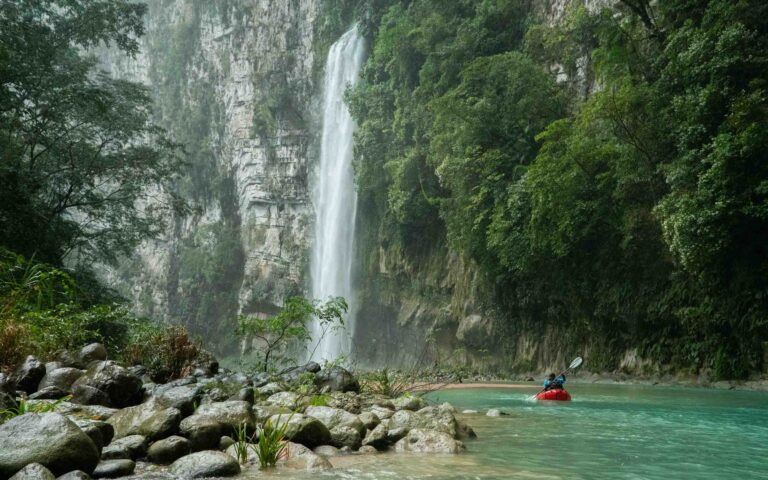
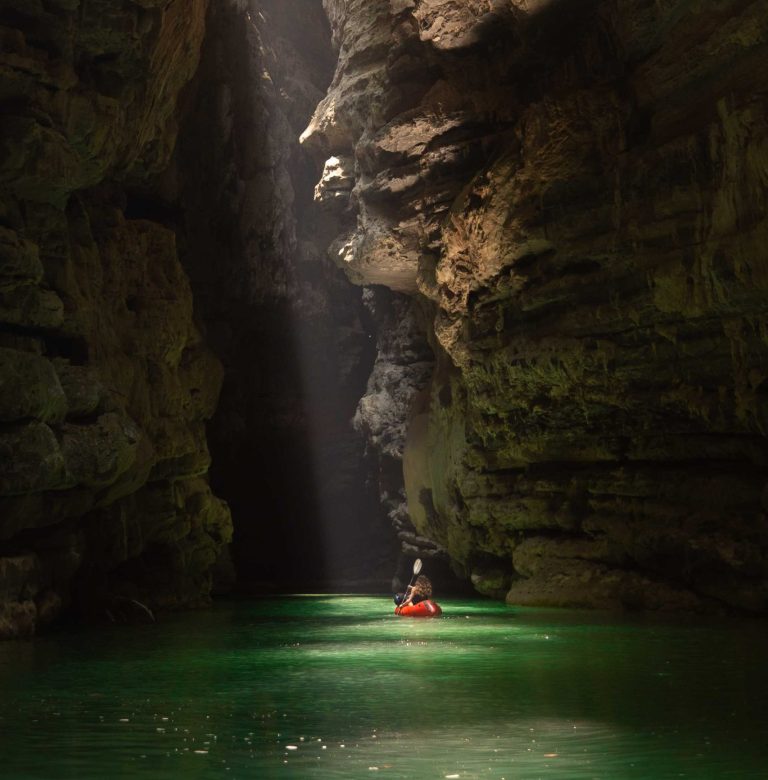
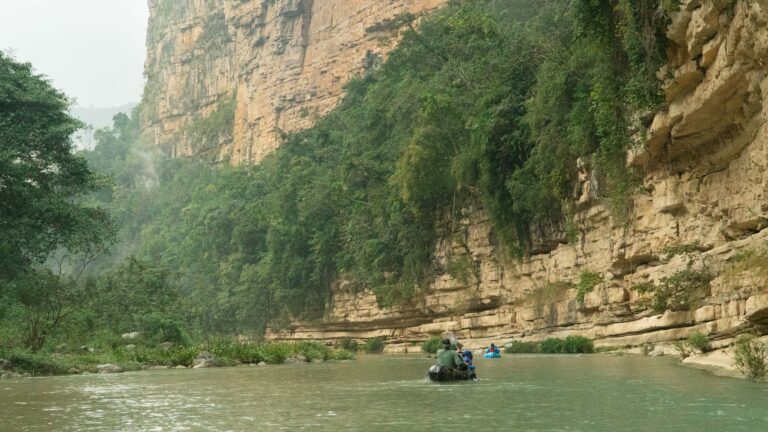
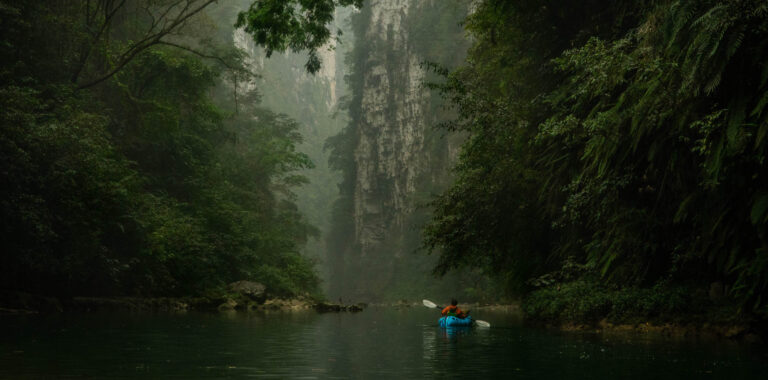
Take a look at where we're going
Take a look at where we'll be going
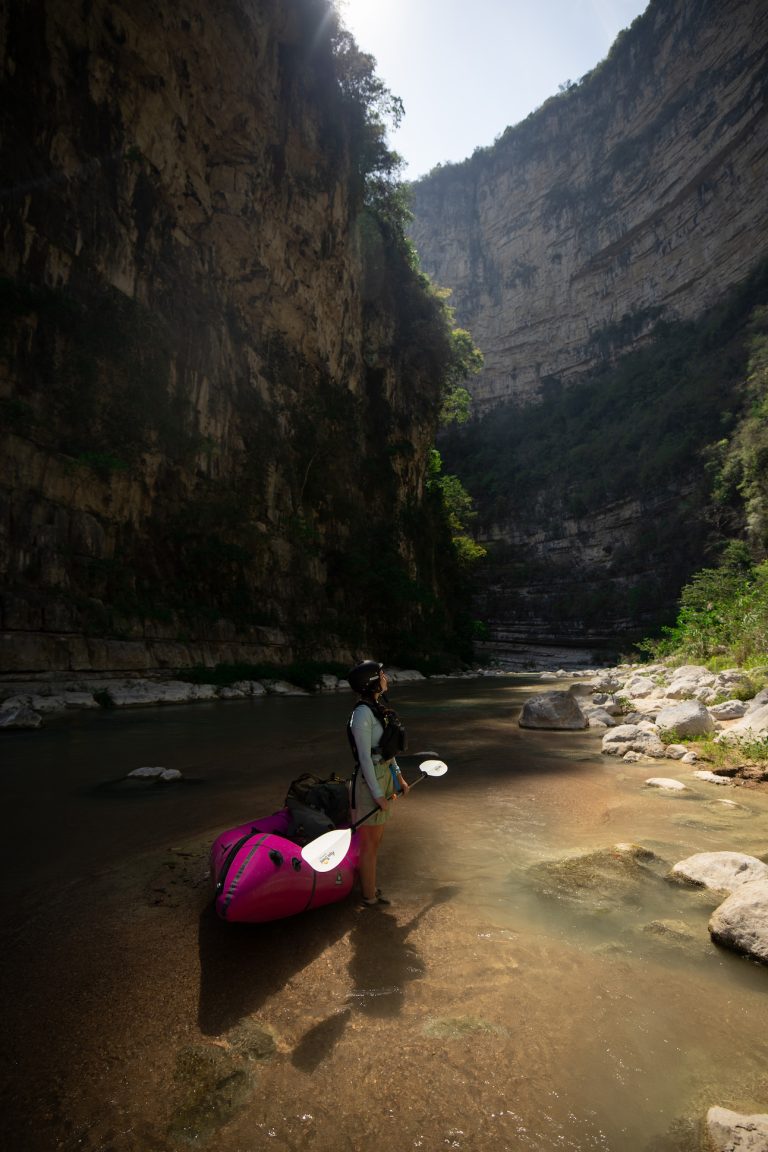
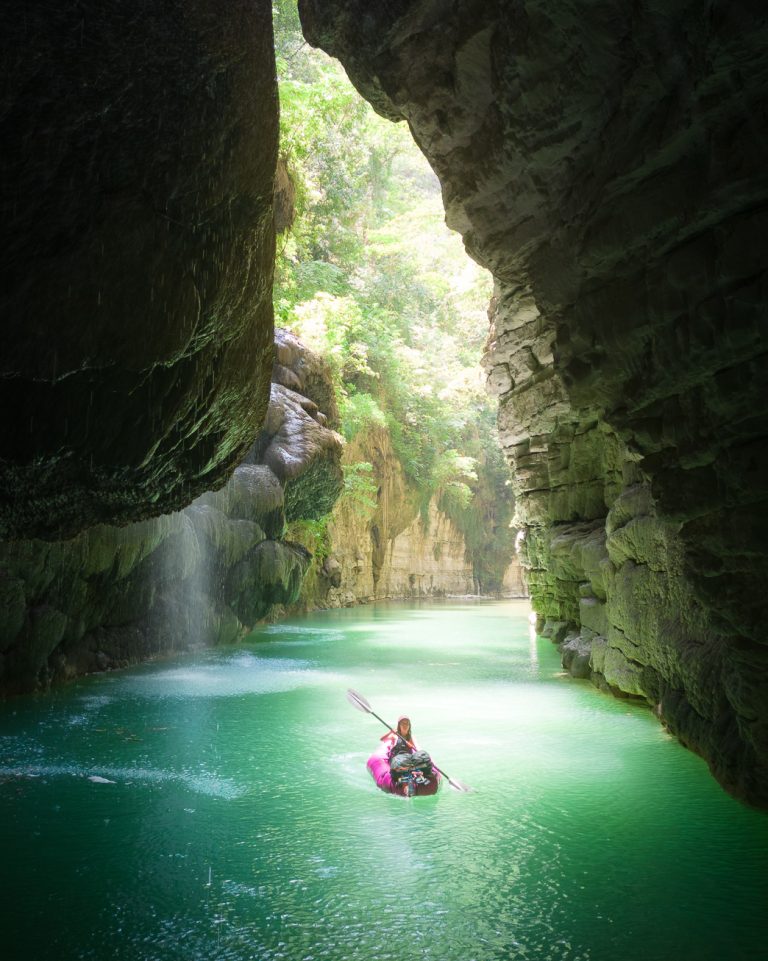
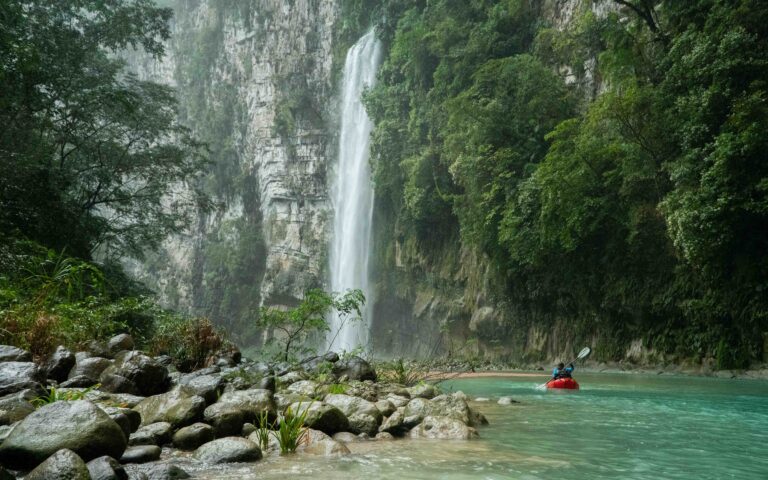
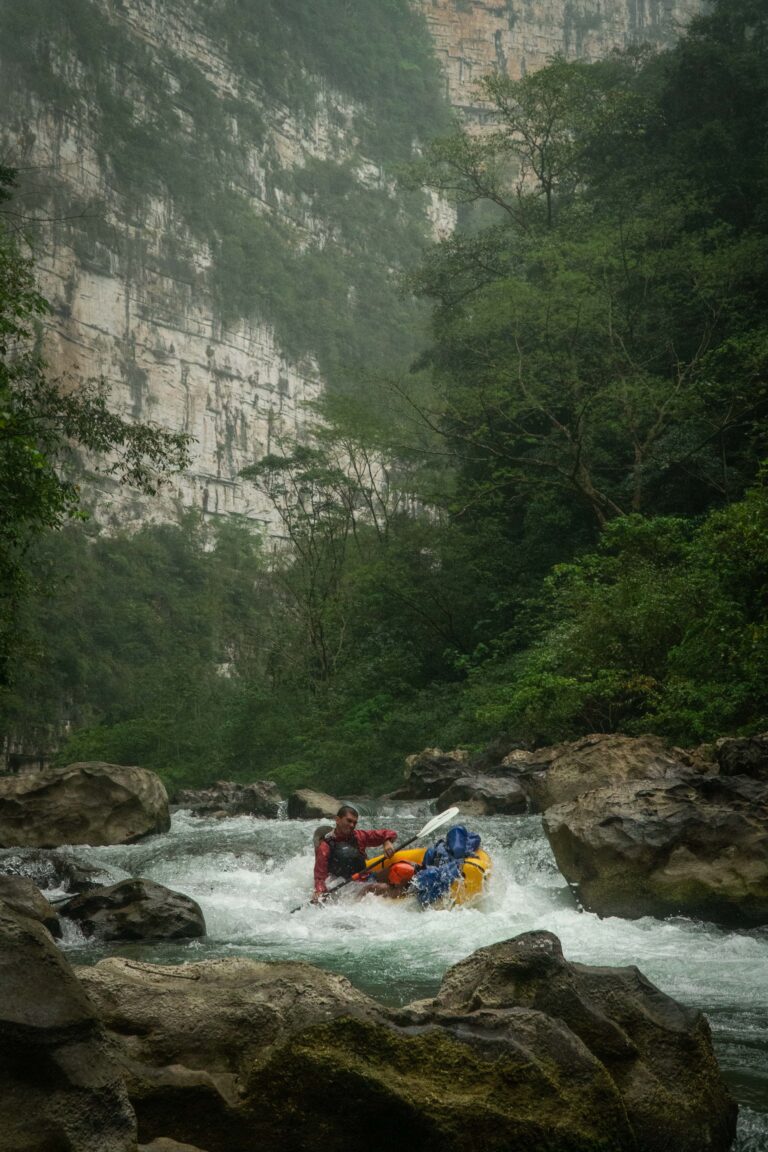
Yes! All those shots are of the same canyon! There truly is no place like this out there.
Yes! All those shots are of the same canyon! There truly is no place like this out there.
QUICK DETAILS
-
Terrain
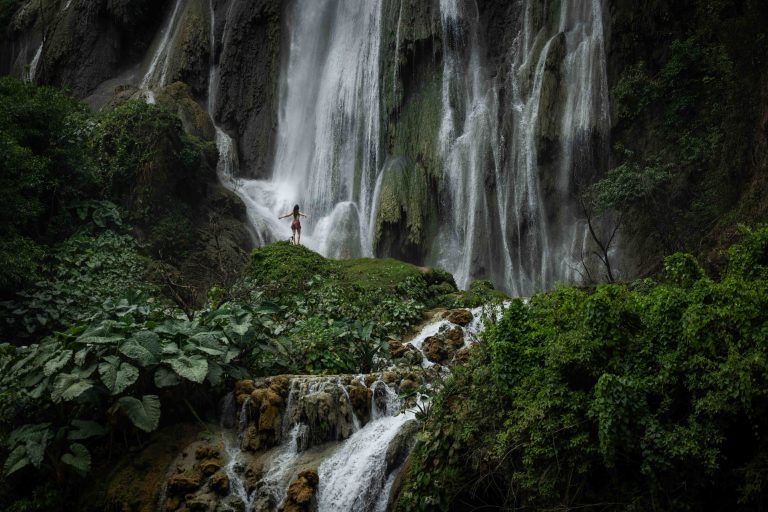
We go from arid landscape to lush, humid jungle as we travel over sandy riverbeds, slick rocks, limestone caves, waterfalls, mud trails, dirt paths, and farms.
-
Airport
Angel Albino Corzo International Airport. Approximately 45 minute taxi to downtown Tuxtla Gutierrez.
-
Impact
We operate on a 100% Leave No Trace policy. Everything we pack in, we pack out, and campsites are left how we found them.
-
Weather
Our trips are scheduled throughout the dry season Feb - May to avoid heavy rains. We can expect average daily highs above 27c/82f and daily lows above 17c/63f.
-
Duration
The total trip length is 11 days, (7 river days). Check out the itinerary below for a sneak peek of each day.
-
Price
$3,742 USD / person
ITINERARY
Group Orientation – San Cristóbal de las Casas
Welcome to Chiapas! Upon arriving at our hotel in San Cristobal, reception staff will assist you with a smooth check-in process. Hotel information will be provided to guests upon registration. At 12:00 PM, we will officially meet our fellow travellers and conduct a group orientation where we will review equipment, logistics, and provide an overview of the exciting week ahead! Following our orientation, we’ll head to a nearby grocery store to pick up any snacks you’d like to bring for the river, as well as any last-minute items you may need for the trip. After returning to the hotel, you’ll have a couple of hours to finalize your packing. This is where everything you plan to take to the river will need to be packed inside the 65L drybags that we will be providing. We’ll conclude the day with a group dinner at 6:00 PM at a traditional local restaurant, and then head back to the hotel for a good night’s rest before our journey begins tomorrow morning.
Meal Included: Dinner
Canyon Entry – First Paddle & Lush Waterfalls
We’ll start the day off with an early 5:00 AM departure. A private shuttle van will take us to a remote village, 2.5 hours away, where we will begin our journey to the river. Extra bags and luggage can be left in secure storage at our hotel. Upon arrival to the village, we will enjoy a freshly prepared breakfast with a local family in their home! We’ll also have an opportunity to get a first-hand look at one of the sustainable cookstoves the Nahua Expeditions team builds for local communities! After breakfast, we’ll start our 7 km (4.3 mi) hike to the river which normally takes around 3 hours to complete. We’ll have the generous assistance of local mules and porters in transporting all of our equipment to the canyon. The hike is primarily through dry, arid shrubland with little shade from the sun. Your guides will recommend wearing long-sleeve clothing, using sunscreen, and carrying water with electrolytes. Once we reach the river, you’ll learn how to set up and rig your packraft — your vessel for the next week! Before commencing our journey down river, we’ll conduct a Paddle Safety Talk to go over hand signals, progressive paddling techniques, proper use of safety gear and equipment, and other important safety protocols. One of our goals as guides is for our trips to serve as an opportunity for our guests to learn new skills which can open the door to new adventures for you around the world. Our campsite for this evening is absolutely breathtaking, and is just a short distance downstream. We’ll enjoy the majority of the day relaxing and playing in a spectacular waterfall!
Meal Included: Breakfast
First Full Paddling Day – Through The Maze
Our mornings on the river typically consist of group breakfasts, then packing up in time for 8:00 AM camp departures — this is the time we aim to be on the water, ready to go, every day while on the river. Today we will have our longest day of paddling: 15.4km (9.6mi). This day provides a perfect introduction to Class II rapids, learning to read whitewater, and further familiarizing ourselves with our packrafts and equipment. We’ll stop and chat about our initial rapids to go over risks and hazards that are specific to these types of rivers, and how to mitigate those risks. The canyon today is predominantly open with lower walls compared to the deeper, more narrow sections we’ll see in the coming days. This means that the majority of our day will have high sun exposure. Sunscreen, long-sleeve clothing, and frequent hydration are things to keep in mind. At around noon, we’ll stop for a quick snack break before conquering the legendary Maze: a 1.6km (1mi) rock garden where we’ll work as a team to navigate quick, narrow chutes whilst we continue improving our paddling skills. We conclude The Maze—and the day—with our first Class III rapid of the trip, La Pumpa. Our campsite this evening is nestled at the threshold where the canyon’s flora begins to shift from arid shrubland to lush rainforest.
Towering Walls & Maya Ruins
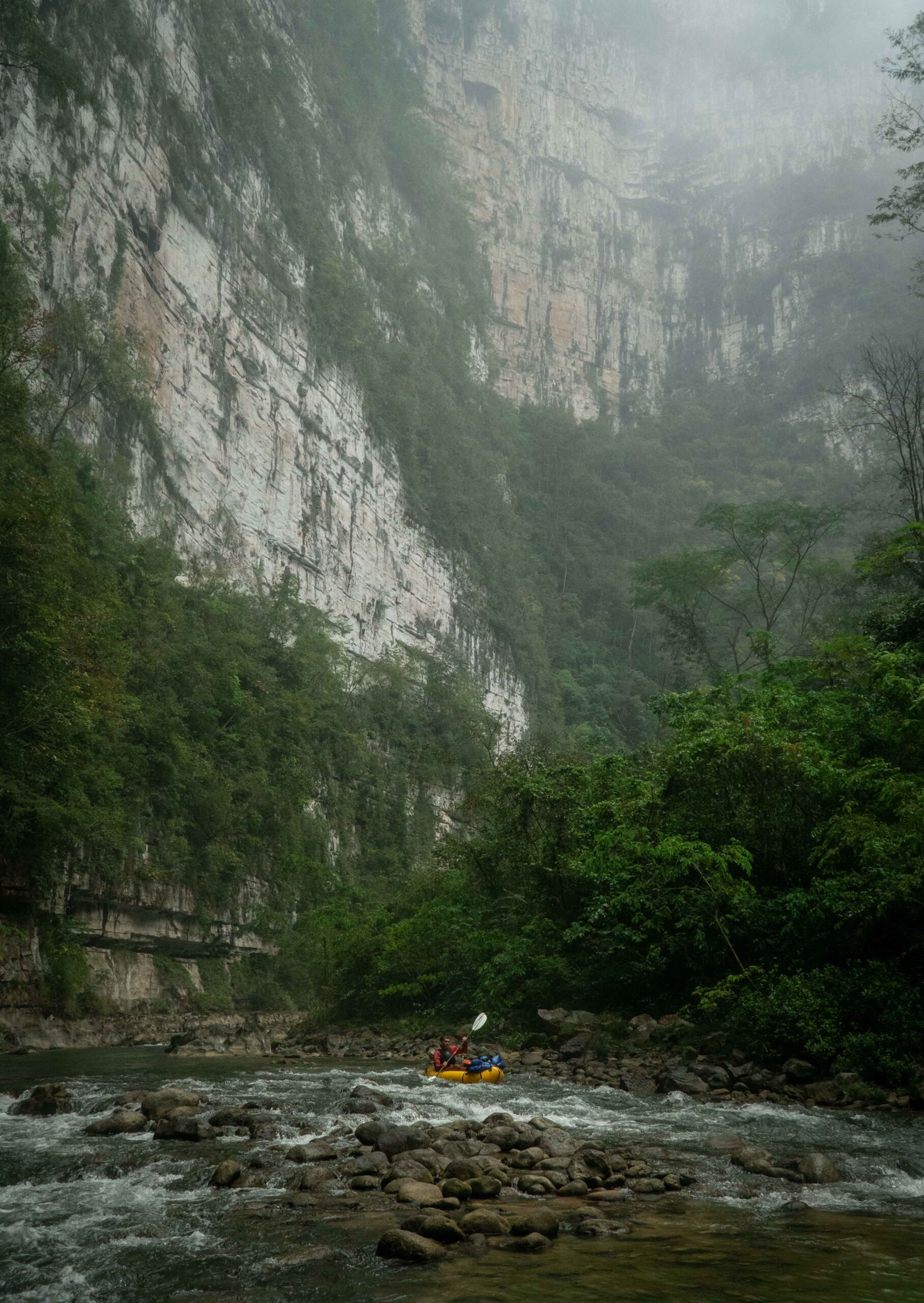
The canyon walls begin to reach heights of 400m+ (1300ft+) as we venture further into the jungle. As the walls grow taller, the canyon becomes more enclosed, narrowing the river and producing more challenging and exhilarating rapids. After our mid-day snack break, we’ll contend with the second largest rapid of the trip, El Jefecito (The Little Boss) — a Class III rapid. Immediately afterwards, we’re rewarded with a side-hike to an ancient Maya ruin site. Well preserved and hidden deep in this jungle for over three millennia, these ruins were once part of a thriving and sophisticated civilization. Ancient Maya ruins like these are the remains of vast cities that were centres of government, religion, astronomy, and trade. Today, these sites provide insights into Maya culture, architecture, and scientific knowledge. Our group will have the privilege of experiencing this piece of history all to ourselves. We’ll then get back on the water and conquer our largest rapid of the trip: El Jefe (The Boss) — the only Class IV rapid of our expedition. Before entering any of the more technical rapids of the trip, we will always stop and scout the rapids as a group. The purpose of scouting is to get a clear visual of the line that we must take, and identify any potential hazards or obstacles. Many rapids on this day will put our paddling skills to the test! Our campsite is a short distance downstream from here. A conclusion to an epic and fulfilling day of adventure. Today’s paddling distance will be roughly 7.3km (4.5mi).
First Portage & The Oasis
You’ll find yourself waking up at one of the most scenic sites you can dream of. With spectacular jungle vistas in each direction, it really sinks in that you’re deep inside an otherworldly place. Our paddling distance today is a short but action-packed 4.6km (2.85mi). Throughout the morning, we’ll reach our first portage of the trip (a “portage” is an overland route where we must carry boats and gear to bypass an obstacle, such as rapids, waterfalls, or impassable sections of river). This portage is relatively short, and should take our entire group about 20 minutes to complete. Afterwards, we’ll ride the Tower Slide rapid, before navigating through The Miniature Maze. It’s not uncommon to see livestock such as cows and even horses by the riverbanks on this day. Animals will often walk for several hours down into the canyon from regional pastures to find a drink of water. Continuing downstream, we’ll find ourselves entering The Oasis — a tranquil series of emerald pools that truly belong in a scene of The Jungle Book. We’ll get to spend some time cliff jumping and swimming here. On many prior trips we’ve even been able to spot curious river otters here! Our camp for this evening is just beyond The Oasis — another wild and stunning beach.
Limestone Cave Exploration
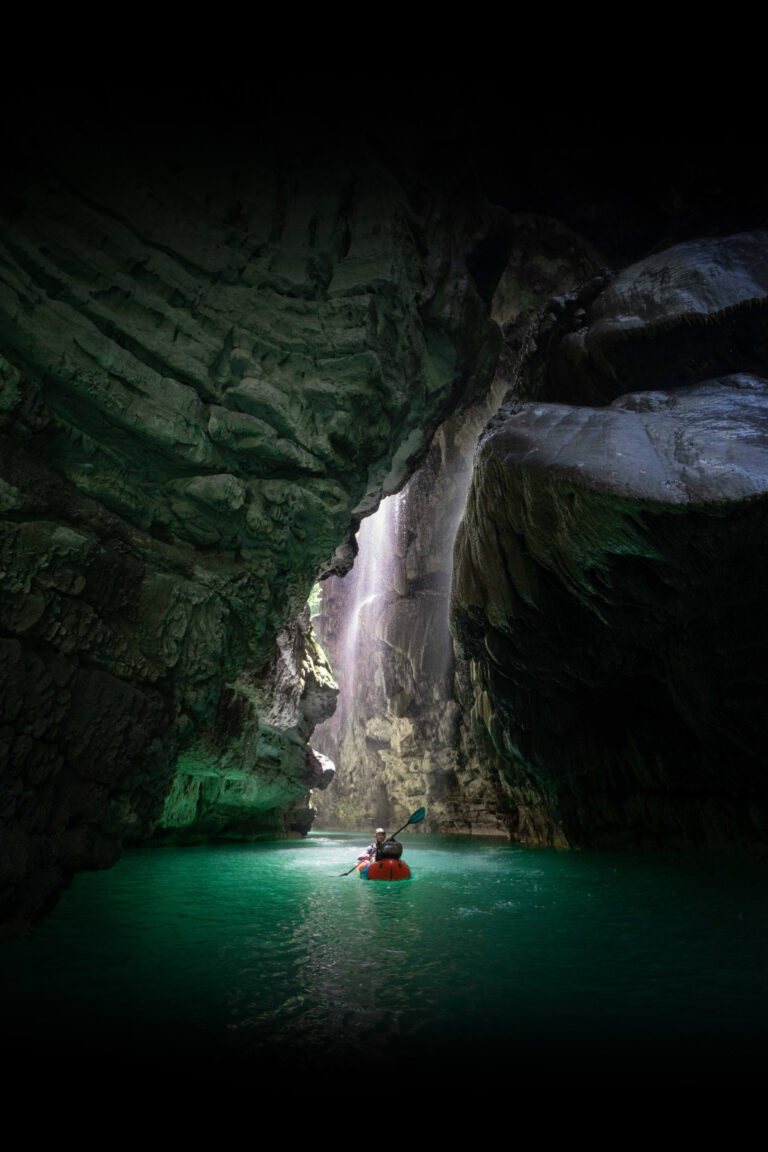
Our easiest and shortest day on the river also happens to be our caving day. We’ll make our way downstream, encountering several fun and technical rapids until reaching a phenomenal lunch spot with wild mandarine-lime fruit hanging from nearby trees. Slightly further downstream we’ll stop and pull off at the catchment of a dry wash. Together, we’ll scramble and bushwhack up for about 20 minutes to the entrance of the region’s largest and most impressive karst system. We’ll wear helmets and headlamps as we venture deep into the underground world. For the Maya, the underworld was called Xibalba (Place of Fear). Caves were considered sacred portals connecting the human world with the realm of their gods, ancestors, and spirits. This belief was especially strong in southern Mexico and the Yucatán Peninsula, where the landscape is made of limestone. Natural sinkholes (cenotes) and cave systems provided the main source of fresh water, making them both practically essential and spiritually significant. Inside the cave we’ll also get to see old pottery and human remains left by these ancient Maya civilizations as offerings to their gods. We’ll spend about two hours inside, and then trek back down to the rafts where a short paddle awaits until we reach a unique campsite nestled in the jungle. This concludes an absolutely extraordinary day you’ll remember for the rest of your life, without a doubt. Today’s paddling distance is 4.8km (3mi).
Landslide Portage & Deep Narrows
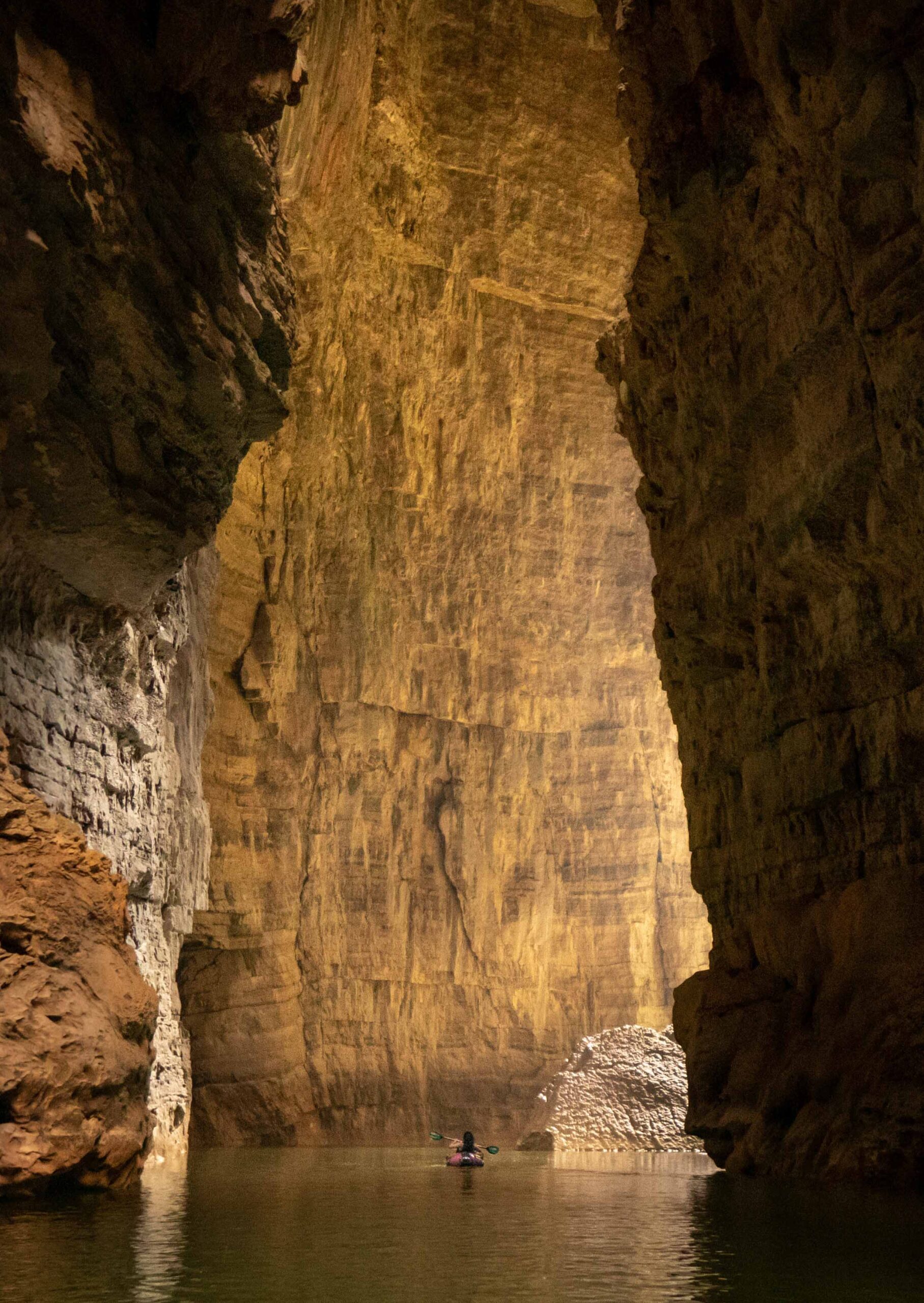
After packing up camp we take a short float down to a large and technical landslide along the river. This is our largest and last portage of the trip. It should take our group around an hour to get all of our gear through. The reward that comes after is difficult to put into words. At this point your jaws have dropped and minds have been blown, but today you will start to question reality. We will float past what few people have had the privilege of experiencing. And to top it off, we finish the day camping near the worlds tallest natural arch. Total paddling distance is 5.5km (3.4mi).
Canyon Extraction – Hike Out – Village Homestay
We begin our extraction from the canyon by ascending a vertical rope, up a 20m (65ft) wall to a small platform where we will re-fuel with snacks and electrolytes before our hike to the nearest village. Proper gear and instructions will be provided to safely and comfortably complete this rope ascent. The hike that follows is roughly 3 hours, with the first 55 minutes being the steepest and most challenging. We will be tasked with carrying our gear up this initial steep section until we reach a clearcut where local mules will be waiting for us to assist in carrying our gear for the remaining two hours. A good attitude comes above any physical ability on this trip! Upon reaching a dirt road near the village, we’ll get shuttled by motorbike to the home of Elsa, our local host. Here, we’ll be treated with a delicious home-cooked meal, made using locally grown ingredients and cooked on one of Nahua Expeditions’ first ever built sustainable cookstoves! After dinner, you’ll be able to take a bucket shower, before we set up to sleep the night in Elsa’s home.
Meal Included: Dinner
Stove Build – Remote Jungle to San Cristóbal de las Casas
This day starts off with an early rise to the sound of roosters and village life. We’ll learn to make handmade tortillas with Elsa using her cookstove, and have a quick, locally-grown breakfast. By the time we’re finished, several locals on motorbikes will be waiting to shuttle us over to the next village to build a sustainable cookstove! Here, as a team, we’ll spend two hours building a brick stove inside the home of a local family who will benefit from clean air in their household for years to come. After our stove building activity, we’ll jump back on the motorbikes and get shuttled all the way back, through the jungle, to the village where we started our journey on Day 2. This motorbike ride will take around 45 minutes via dirt jungle roads and through several small rural villages. Upon arrival back to our starting village, a private shuttle van will be waiting for us to take us back to the colonial town of San Cristóbal de las Casas. This drive is around 2.5 hours back to our original hotel from Day 1. This is also where we’ll be reunited with all of our luggage that we didn’t take to the river. Once everyone gets cleaned up, we’ll go for a delicious early dinner at one of the many fantastic restaurants San Cristóbal has to offer. The rest of the evening can be spent exploring the picturesque shops and streets before wrapping the day up with some drinks at a rooftop restaurant overlooking the city.
Meals Included: Breakfast, Dinner
Full Day in San Cristóbal de las Casas
After getting a feel for the magical town you now find yourself waking up in, today we have the opportunity to spend the entire day experiencing what really makes San Cristóbal a “Pueblo Magico” (Magical Town). Popular attractions include the markets, shops, historical museums, art galleries, restaurants and so much more. If you’re not feeling up for that, you can sit back and relax at the hotel — you have the entire day to do whatever you’d like. Depending on what everyone decides, we’ll typically head out for a farewell dinner in the evening as this is our last full day together as a group.
Final Day of The Trip – San Cristóbal de las Casas
This is the last date listed for the trip. We’re confident that at this point you’ll be leaving with lifelong memories and new friends who shared a once in a lifetime experience with you. Depending on your travel arrangements, we will help you arrange transportation to Angel Albino Corzo International Airport in time for your flight. Hotel check-out is at 1:00pm — if your flight is scheduled later in the day, you are welcome to hang out and / or leave your luggage at our guide house which we rent for the duration of the season. If you plan to continue exploring Chiapas, or beyond, consult with trip leaders who will be happy to provide recommendations!
Safe travels and we’ll see you on the next one!
SKILL PREREQUISITES
Paddling Skill
Camping Experience
Physical Fitness Level
Good Attitude
PERSONAL PACKING LIST
Lightweight is best. If you and someone in your group decide to share a tent, you’ll benefit from having less weight to carry, and more space amongst you in your packs.
The sleeping bags that work best for this trip are bags designed for summer months. These tend to be light and compact sleeping bags. Look specifically for bags that are categorized as “ultralight” or suitable for backpacking, as they can compress down to a minimal size. Sleeping bags that are rated for temperatures below 9c/48f might be excessive for this trip; however, individual preferences vary, so choose based on your comfort with nighttime temperatures. Avoid bulky sleeping bags so you can allocate more space for food and other gear in your pack.
Small, inflatable, compact and light pads are best. Sea to Summit and Therm-a-Rest are two brands we would recommend.
Keep in mind we will be in and out of water everyday. Choose footwear that is comfortable while wet, and comfortable enough for the final hike out of the canyon. Adidas Terrex Hiking Shoes are a great choice, and can be worn throughout the entire trip. Another good option are Solomon Trail Running Shoes. As we walk along the river, our shoes will get small rocks in them, so we recommend decent hiking socks or NRS Hydroskin 0.5 socks. You can also bring some sandals / slides for at camp. We don’t recommend rafting in sandals as you’ll need good traction and entire-foot protection while walking on and around rocks.
We will be getting wet every day while on the river. Water clothing during the day is best. Be sure to bring at least one long sleeve shirt and leggings / pants to protect against sunburn, and river safe sunscreen. We also recommend bringing a swim suit, lightweight rain jacket, light puffy jacket or fleece and dry clothes for camp / evenings. Merino wool is best for quick drying and smell resistant properties.
Our drinking water along the river will come from both natural springs and river water. You’ll need to bring a filtration system before being able to safely drink from water sources on this trip. There are an array of filtration systems on the market, but bringing a water bottle that doubles as a filter might be the best option for you. We recommend the LifeStraw Go Series Water Filter Bottle – plastic version.
If you already own a filter such as a pump filter that attaches to your water bottle, that works great as well.
We avoid bringing squeeze bottle filters as they are susceptible to punctures and often have smaller filters attached.
Any personal belongings left unprotected will get submerged and wet at some point on the river. Whether you want to have quick access to your camera gear, or snacks and sunscreen consider bringing a small < 12L drybag which you can keep in between your legs while paddling.
We will be boiling water for meals two times per day–for breakfast and dinner. The best meal solution is backpacking meals. These are pre-made, freeze-dried and dehydrated meals that are prepared simply by adding water. Popular brands include Mountain House, Good To-Go Meals and Backpackers Pantry. We will spend 7 days on the river. We recommend bringing 2 meals per each day on the river.
Our guides use the Sea to Summit Aeros Premium Pillow.
Like all nights out camping in the wild, a headlamp is a must. We recommend the Black Diamond Storm series headlamps.
We recommend bringing a long spoon or a long spork. The Sea to Summit Alpha Spork is a great utensil and is long enough to comfortably eat out of backpacking meal pouches! Depending on the food you plan on bringing into the canyon, you might also consider bringing a foldable knife (if you must bring a knife be sure to bring some tape to prevent it from accidentally opening while inside your pack).
This is an optional item. If you choose to bring one be sure to pick a lightweight option. We recommend the Helinox Chair Zero along with the Chair Zero Groundsheet to avoid having the chair legs sink into the sand.
We recommend bringing a small, lightweight and quickdrying towel. The REI Co-op Multi Towel Light is a good example, but anything similar or made with microfiber is a good bet. Look for towels that are marketed as “lightweight”, “quick-dry”, “ultralight” or “microfiber”.
We’ll be directly exposed to sunlight for most of the day during the expedition. Please be sure to bring sunscreen that has River Safe or Reef Safe, and Biodegradable properties. Products that meet this criteria are typically water-resistant, but be sure to double-check, as we’ll be in and out of the water consistently throughout the day.
If you choose to bring shampoo, conditioner, body wash or soap of any kind, be sure to bring a biodegradable product. This will be a requirement if you plan on packing any soap related products onto the river. Products that meet this criteria are typically marketed as “outdoor”, “biodegradable”, “environmentally safe”, “plant based”, “eco friendly” or “organic”.
Although not perfect, the use of these biodegradable products helps minimize our impact and limit the introduction of harmful chemicals into the rivers and water bodies we’ll be traveling through. As a member of this group, one of your main goals will be to promote responsible outdoor ethics, and do your part to ensure that future generations can enjoy these environments.
Our commitment to leave no trace means whatever we pack in, we pack out, including any human waste we produce.
There are 2 things you’ll need: WAG Bags and a 4″+ diameter plastic cylindrical container with a lid. You might also consider bringing a Large Ziploc bag wrapped with duct tape to pack out feminine hygiene items and / or excess toilet paper.
Our waste management procedure in the canyon is as follows: We will poop and deposit our toilet paper into the Wag Bags. When finished, we will seal or tie up the bag and put it inside a container which we’ll pack out of the canyon.
An all in one solution is a product by Cleanwaste called Toilet In A Tube, and can can be found here. WAG Bags can be found here.
These are some awesome Leave no Trace resources we recommend checking out:
INCLUSIONS & EXCLUSIONS
Included
-
Guide Services
-
Fees and Permits
-
Transportation
-
Accommodations as indicated in the itinerary
-
Canyon extraction with gear
-
Porter services
-
Cabin usage and service
-
Packraft, Paddle, Lifejacket, Helmet, and 65L Drybag
-
Meals as indicated in the itinerary
-
Camping stoves, gas and pots for boiling water
-
Luggage storage during the expedition
Not Included
-
Airfare to and from destination
-
Trip cancellation insurance or any other travel insurance
-
Personal gear (included in Personal Packing List)
-
Backpacking food (meals on the river)
GETTING THERE
Most travelers coming from abroad will need to take a connecting flight at either Mexico City International Airport or Guadalajara International Airport before landing in Tuxtla Gutierrez, Chiapas. Your final destination Airport is Angel Albino Corzo International Airport. Flight times from Mexico City to Tuxtla are around 1.5 hours and times from Guadalajara to Tuxtla are around 2 hours.
Angel Albino Corzo International Airport is located 78km/49mi (approx. an 80min drive) to San Cristobal de las Casas, where our group will meet at hotel and attend orientation.
We highly recommend landing at least a day prior to the start date of the expedition in case of any travel delays or unforeseeable circumstances. You can easily find clean and reliable airport taxis upon arrival outside the airport. They typically charge no more than $40 USD to take you anywhere in San Cristobal de las Casas. Hotel and restaurant recommendations will be made if you are landing prior to the expedition.
QUICK DETAILS
-
Terrain
We go from arid landscape to lush, humid jungle as we travel over sandy riverbeds, slick rocks, limestone caves, waterfalls, mud trails, dirt paths, and farms.
-
Airport
Angel Albino Corzo International Airport. Approximately 45 minute taxi to downtown Tuxtla Gutierrez.
-
Impact
We operate on a 100% Leave No Trace policy. Everything we pack in, we pack out, and campsites are left how we found them.
-
Weather
Our trips are scheduled throughout the dry season Feb - May to avoid heavy rains. We can expect average daily highs above 27c/82f and daily lows above 17c/63f.
-
Duration
The total trip length is 11 days, (7 river days). Check out the itinerary below for a sneak peek of each day.
-
Price
$3,742 USD / person
SKILL PREREQUISITES
Paddling Skill
Camping Experience
Physical Fitness Level
Good Attitude
ITINERARY
Group Orientation – San Cristóbal de las Casas
Welcome to Chiapas! Upon arriving at our hotel in San Cristobal, reception staff will assist you with a smooth check-in process. Hotel information will be provided to guests upon registration. At 12:00 PM, we will officially meet our fellow travellers and conduct a group orientation where we will review equipment, logistics, and provide an overview of the exciting week ahead! Following our orientation, we’ll head to a nearby grocery store to pick up any snacks you’d like to bring for the river, as well as any last-minute items you may need for the trip. After returning to the hotel, you’ll have a couple of hours to finalize your packing. This is where everything you plan to take to the river will need to be packed inside the 65L drybags that we will be providing. We’ll conclude the day with a group dinner at 6:00 PM at a traditional local restaurant, and then head back to the hotel for a good night’s rest before our journey begins tomorrow morning.
Meal Included: Dinner
Canyon Entry – First Paddle & Lush Waterfalls
We’ll start the day off with an early 5:00 AM departure. A private shuttle van will take us to a remote village, 2.5 hours away, where we will begin our journey to the river. Extra bags and luggage can be left in secure storage at our hotel. Upon arrival to the village, we will enjoy a freshly prepared breakfast with a local family in their home! We’ll also have an opportunity to get a first-hand look at one of the sustainable cookstoves the Nahua Expeditions team builds for local communities! After breakfast, we’ll start our 7 km (4.3 mi) hike to the river which normally takes around 3 hours to complete. We’ll have the generous assistance of local mules and porters in transporting all of our equipment to the canyon. The hike is primarily through dry, arid shrubland with little shade from the sun. Your guides will recommend wearing long-sleeve clothing, using sunscreen, and carrying water with electrolytes. Once we reach the river, you’ll learn how to set up and rig your packraft — your vessel for the next week! Before commencing our journey down river, we’ll conduct a Paddle Safety Talk to go over hand signals, progressive paddling techniques, proper use of safety gear and equipment, and other important safety protocols. One of our goals as guides is for our trips to serve as an opportunity for our guests to learn new skills which can open the door to new adventures for you around the world. Our campsite for this evening is absolutely breathtaking, and is just a short distance downstream. We’ll enjoy the majority of the day relaxing and playing in a spectacular waterfall!
Meal Included: Breakfast
First Full Paddling Day – Through The Maze
Our mornings on the river typically consist of group breakfasts, then packing up in time for 8:00 AM camp departures — this is the time we aim to be on the water, ready to go, every day while on the river. Today we will have our longest day of paddling: 15.4km (9.6mi). This day provides a perfect introduction to Class II rapids, learning to read whitewater, and further familiarizing ourselves with our packrafts and equipment. We’ll stop and chat about our initial rapids to go over risks and hazards that are specific to these types of rivers, and how to mitigate those risks. The canyon today is predominantly open with lower walls compared to the deeper, more narrow sections we’ll see in the coming days. This means that the majority of our day will have high sun exposure. Sunscreen, long-sleeve clothing, and frequent hydration are things to keep in mind. At around noon, we’ll stop for a quick snack break before conquering the legendary Maze: a 1.6km (1mi) rock garden where we’ll work as a team to navigate quick, narrow chutes whilst we continue improving our paddling skills. We conclude The Maze—and the day—with our first Class III rapid of the trip, La Pumpa. Our campsite this evening is nestled at the threshold where the canyon’s flora begins to shift from arid shrubland to lush rainforest.
Towering Walls & Maya Ruins
The canyon walls begin to reach heights of 400m+ (1300ft+) as we venture further into the jungle. As the walls grow taller, the canyon becomes more enclosed, narrowing the river and producing more challenging and exhilarating rapids. After our mid-day snack break, we’ll contend with the second largest rapid of the trip, El Jefecito (The Little Boss) — a Class III rapid. Immediately afterwards, we’re rewarded with a side-hike to an ancient Maya ruin site. Well preserved and hidden deep in this jungle for over three millennia, these ruins were once part of a thriving and sophisticated civilization. Ancient Maya ruins like these are the remains of vast cities that were centres of government, religion, astronomy, and trade. Today, these sites provide insights into Maya culture, architecture, and scientific knowledge. Our group will have the privilege of experiencing this piece of history all to ourselves. We’ll then get back on the water and conquer our largest rapid of the trip: El Jefe (The Boss) — the only Class IV rapid of our expedition. Before entering any of the more technical rapids of the trip, we will always stop and scout the rapids as a group. The purpose of scouting is to get a clear visual of the line that we must take, and identify any potential hazards or obstacles. Many rapids on this day will put our paddling skills to the test! Our campsite is a short distance downstream from here. A conclusion to an epic and fulfilling day of adventure. Today’s paddling distance will be roughly 7.3km (4.5mi).
First Portage & The Oasis
You’ll find yourself waking up at one of the most scenic sites you can dream of. With spectacular jungle vistas in each direction, it really sinks in that you’re deep inside an otherworldly place. Our paddling distance today is a short but action-packed 4.6km (2.85mi). Throughout the morning, we’ll reach our first portage of the trip (a “portage” is an overland route where we must carry boats and gear to bypass an obstacle, such as rapids, waterfalls, or impassable sections of river). This portage is relatively short, and should take our entire group about 20 minutes to complete. Afterwards, we’ll ride the Tower Slide rapid, before navigating through The Miniature Maze. It’s not uncommon to see livestock such as cows and even horses by the riverbanks on this day. Animals will often walk for several hours down into the canyon from regional pastures to find a drink of water. Continuing downstream, we’ll find ourselves entering The Oasis — a tranquil series of emerald pools that truly belong in a scene of The Jungle Book. We’ll get to spend some time cliff jumping and swimming here. On many prior trips we’ve even been able to spot curious river otters here! Our camp for this evening is just beyond The Oasis — another wild and stunning beach.
Limestone Cave Exploration
Our easiest and shortest day on the river also happens to be our caving day. We’ll make our way downstream, encountering several fun and technical rapids until reaching a phenomenal lunch spot with wild mandarine-lime fruit hanging from nearby trees. Slightly further downstream we’ll stop and pull off at the catchment of a dry wash. Together, we’ll scramble and bushwhack up for about 20 minutes to the entrance of the region’s largest and most impressive karst system. We’ll wear helmets and headlamps as we venture deep into the underground world. For the Maya, the underworld was called Xibalba (Place of Fear). Caves were considered sacred portals connecting the human world with the realm of their gods, ancestors, and spirits. This belief was especially strong in southern Mexico and the Yucatán Peninsula, where the landscape is made of limestone. Natural sinkholes (cenotes) and cave systems provided the main source of fresh water, making them both practically essential and spiritually significant. Inside the cave we’ll also get to see old pottery and human remains left by these ancient Maya civilizations as offerings to their gods. We’ll spend about two hours inside, and then trek back down to the rafts where a short paddle awaits until we reach a unique campsite nestled in the jungle. This concludes an absolutely extraordinary day you’ll remember for the rest of your life, without a doubt. Today’s paddling distance is 4.8km (3mi).
Landslide Portage & Deep Narrows
After packing up camp we take a short float down to a large and technical landslide along the river. This is our largest and last portage of the trip. It should take our group around an hour to get all of our gear through. The reward that comes after is difficult to put into words. At this point your jaws have dropped and minds have been blown, but today you will start to question reality. We will float past what few people have had the privilege of experiencing. And to top it off, we finish the day camping near the worlds tallest natural arch. Total paddling distance is 5.5km (3.4mi).
Canyon Extraction – Hike Out – Village Homestay
We begin our extraction from the canyon by ascending a vertical rope, up a 20m (65ft) wall to a small platform where we will re-fuel with snacks and electrolytes before our hike to the nearest village. Proper gear and instructions will be provided to safely and comfortably complete this rope ascent. The hike that follows is roughly 3 hours, with the first 55 minutes being the steepest and most challenging. We will be tasked with carrying our gear up this initial steep section until we reach a clearcut where local mules will be waiting for us to assist in carrying our gear for the remaining two hours. A good attitude comes above any physical ability on this trip! Upon reaching a dirt road near the village, we’ll get shuttled by motorbike to the home of Elsa, our local host. Here, we’ll be treated with a delicious home-cooked meal, made using locally grown ingredients and cooked on one of Nahua Expeditions’ first ever built sustainable cookstoves! After dinner, you’ll be able to take a bucket shower, before we set up to sleep the night in Elsa’s home.
Meal Included: Dinner
Stove Build – Remote Jungle to San Cristóbal de las Casas
This day starts off with an early rise to the sound of roosters and village life. We’ll learn to make handmade tortillas with Elsa using her cookstove, and have a quick, locally-grown breakfast. By the time we’re finished, several locals on motorbikes will be waiting to shuttle us over to the next village to build a sustainable cookstove! Here, as a team, we’ll spend two hours building a brick stove inside the home of a local family who will benefit from clean air in their household for years to come. After our stove building activity, we’ll jump back on the motorbikes and get shuttled all the way back, through the jungle, to the village where we started our journey on Day 2. This motorbike ride will take around 45 minutes via dirt jungle roads and through several small rural villages. Upon arrival back to our starting village, a private shuttle van will be waiting for us to take us back to the colonial town of San Cristóbal de las Casas. This drive is around 2.5 hours back to our original hotel from Day 1. This is also where we’ll be reunited with all of our luggage that we didn’t take to the river. Once everyone gets cleaned up, we’ll go for a delicious early dinner at one of the many fantastic restaurants San Cristóbal has to offer. The rest of the evening can be spent exploring the picturesque shops and streets before wrapping the day up with some drinks at a rooftop restaurant overlooking the city.
Meals Included: Breakfast, Dinner
Full Day in San Cristóbal de las Casas
After getting a feel for the magical town you now find yourself waking up in, today we have the opportunity to spend the entire day experiencing what really makes San Cristóbal a “Pueblo Magico” (Magical Town). Popular attractions include the markets, shops, historical museums, art galleries, restaurants and so much more. If you’re not feeling up for that, you can sit back and relax at the hotel — you have the entire day to do whatever you’d like. Depending on what everyone decides, we’ll typically head out for a farewell dinner in the evening as this is our last full day together as a group.
Final Day of The Trip – San Cristóbal de las Casas
This is the last date listed for the trip. We’re confident that at this point you’ll be leaving with lifelong memories and new friends who shared a once in a lifetime experience with you. Depending on your travel arrangements, we will help you arrange transportation to Angel Albino Corzo International Airport in time for your flight. Hotel check-out is at 1:00pm — if your flight is scheduled later in the day, you are welcome to hang out and / or leave your luggage at our guide house which we rent for the duration of the season. If you plan to continue exploring Chiapas, or beyond, consult with trip leaders who will be happy to provide recommendations!
Safe travels and we’ll see you on the next one!
PERSONAL PACKING LIST
Lightweight is best. If you and someone in your group decide to share a tent, you’ll benefit from having less weight to carry, and more space amongst you in your packs.
The sleeping bags that work best for this trip are bags designed for summer months. These tend to be light and compact sleeping bags. Look specifically for bags that are categorized as “ultralight” or suitable for backpacking, as they can compress down to a minimal size. Sleeping bags that are rated for temperatures below 9c/48f might be excessive for this trip; however, individual preferences vary, so choose based on your comfort with nighttime temperatures. Avoid bulky sleeping bags so you can allocate more space for food and other gear in your pack.
Keep in mind we will be in and out of water everyday. Choose footwear that is comfortable while wet, and comfortable enough for the final hike out of the canyon. Adidas Terrex Hiking Shoes are a great choice, and can be worn throughout the entire trip. Another good option are Solomon Trail Running Shoes. As we walk along the river, our shoes will get small rocks in them, so we recommend decent hiking socks or NRS Hydroskin 0.5 socks. You can also bring some sandals / slides for at camp. We don’t recommend rafting in sandals as you’ll need good traction and entire-foot protection while walking on and around rocks.
We will be getting wet every day while on the river. Water clothing during the day is best. Be sure to bring at least one long sleeve shirt and leggings / pants to protect against sunburn, and river safe sunscreen. We also recommend bringing a swim suit, lightweight rain jacket, light puffy jacket or fleece and dry clothes for camp / evenings. Merino wool is best for quick drying and smell resistant properties.
Our drinking water along the river will come from both natural springs and river water. You’ll need to bring a filtration system before being able to safely drink from water sources on this trip. There are an array of filtration systems on the market, but bringing a water bottle that doubles as a filter might be the best option for you. We recommend the LifeStraw Go Series Water Filter Bottle – plastic version.
If you already own a filter such as a pump filter that attaches to your water bottle, that works great as well.
We avoid bringing squeeze bottle filters as they are susceptible to punctures and often have smaller filters attached.
Any personal belongings left unprotected will get submerged and wet at some point on the river. Whether you want to have quick access to your camera gear, or snacks and sunscreen consider bringing a small < 12L drybag which you can keep in between your legs while paddling.
We recommend bringing a small, lightweight and quickdrying towel. The REI Co-op Multi Towel Light is a good example, but anything similar or made with microfiber is a good bet. Look for towels that are marketed as “lightweight”, “quick-dry”, “ultralight” or “microfiber”.
We’ll be directly exposed to sunlight for most of the day during the expedition. Please be sure to bring sunscreen that has River Safe or Reef Safe, and Biodegradable properties. Products that meet this criteria are typically water-resistant, but be sure to double-check, as we’ll be in and out of the water consistently throughout the day.
Small, inflatable, compact and light pads are best. Sea to Summit and Therm-a-Rest are two brands we would recommend.
Our guides use the Sea to Summit Aeros Premium Pillow.
Like all nights out camping in the wild, a headlamp is a must. We recommend the Black Diamond Storm series headlamps.
We recommend bringing a long spoon or a long spork. The Sea to Summit Alpha Spork is a great utensil and is long enough to comfortably eat out of backpacking meal pouches! Depending on the food you plan on bringing into the canyon, you might also consider bringing a foldable knife (if you must bring a knife be sure to bring some tape to prevent it from accidentally opening while inside your pack).
This is an optional item. If you choose to bring one be sure to pick a lightweight option. We recommend the Helinox Chair Zero along with the Chair Zero Groundsheet to avoid having the chair legs sink into the sand.
If you choose to bring shampoo, conditioner, body wash or soap of any kind, be sure to bring a biodegradable product. This will be a requirement if you plan on packing any soap related products onto the river. Products that meet this criteria are typically marketed as “outdoor”, “biodegradable”, “environmentally safe”, “plant based”, “eco friendly” or “organic”.
Although not perfect, the use of these biodegradable products helps minimize our impact and limit the introduction of harmful chemicals into the rivers and water bodies we’ll be traveling through. As a member of this group, one of your main goals will be to promote responsible outdoor ethics, and do your part to ensure that future generations can enjoy these environments.
Our commitment to leave no trace means whatever we pack in, we pack out, including any human waste we produce.
There are 2 things you’ll need: WAG Bags and a 4″+ diameter plastic cylindrical container with a lid. You might also consider bringing a Large Ziploc bag wrapped with duct tape to pack out feminine hygiene items and / or excess toilet paper.
Our waste management procedure in the canyon is as follows: We will poop and deposit our toilet paper into the Wag Bags. When finished, we will seal or tie up the bag and put it inside a container which we’ll pack out of the canyon.
An all in one solution is a product by Cleanwaste called Toilet In A Tube, and can can be found here. WAG Bags can be found here.
These are some awesome Leave no Trace resources we recommend checking out:
INCLUSIONS & EXCLUSIONS
Included
-
Guide Services
-
Fees and Permits
-
Transportation as indicated in the itinerary
-
Accommodation
-
Personalized 1-1 planning calls with expedition leaders
-
Canyon extraction with gear
-
Porter services
-
Village homestay with local family
-
Packraft, Paddle, Lifejacket, Helmet, and 65L Drybag
-
Meals as indicated in the itinerary
-
Camping stoves, gas and pots for preparing meals
-
Luggage storage during the expedition
Not Included
-
Airfare to and from destination
-
Trip cancellation insurance or any other travel insurance
-
Personal gear (see Personal Packing List above)
-
Dehydrated meals (food items on river)
GETTING THERE
Most travelers coming from abroad will need to take a connecting flight at either Mexico City International Airport or Guadalajara International Airport before landing in Tuxtla Gutierrez, Chiapas. Your final destination Airport is Angel Albino Corzo International Airport. Flight times from Mexico City to Tuxtla are around 1.5 hours and times from Guadalajara to Tuxtla are around 2 hours.
Angel Albino Corzo International Airport is located 78km/49mi (approx. an 80min drive) to San Cristobal de las Casas, where our group will meet at a hotel and attend orientation.
We highly recommend landing at least a day prior to the start date of the expedition in case of any travel delays or unforeseeable circumstances. You can easily find clean and reliable airport taxis upon arrival outside the airport. They typically charge no more than $40 USD to take you anywhere in San Cristobal de las Casas. Hotel and restaurant recommendations will be made if you are landing prior to the expedition.
SKILL PREREQUISITES
Paddling Skill
Camping Experience
Physical Skill
Good Attitude!
GETTING THERE
Most travelers coming from abroad will need to take a connecting flight at either Mexico City International Airport or Guadalajara International Airport before landing in Tuxtla Gutierrez, Chiapas. Your final destination Airport is Angel Albino Corzo International Airport. Flight times from Mexico City to Tuxtla are around 1.5 hours and times from Guadalajara to Tuxtla are around 2 hours.
Angel Albino Corzo International Airport is located 32km/20mi (approx. a 35min drive) to downtown Tuxtla Gutierrez, where our group will meet at hotel and attend orientation.
We highly recommend landing at least a day prior to the start date of the expedition in case of any travel delays or unforeseeable circumstances. You can easily find clean and reliable airport taxis upon arrival outside the airport. They typically charge no more than $15 USD to take you anywhere in Tuxtla. Hotel and restaurant recommendations will be made if you are landing prior to the expedition.
Majestic heights
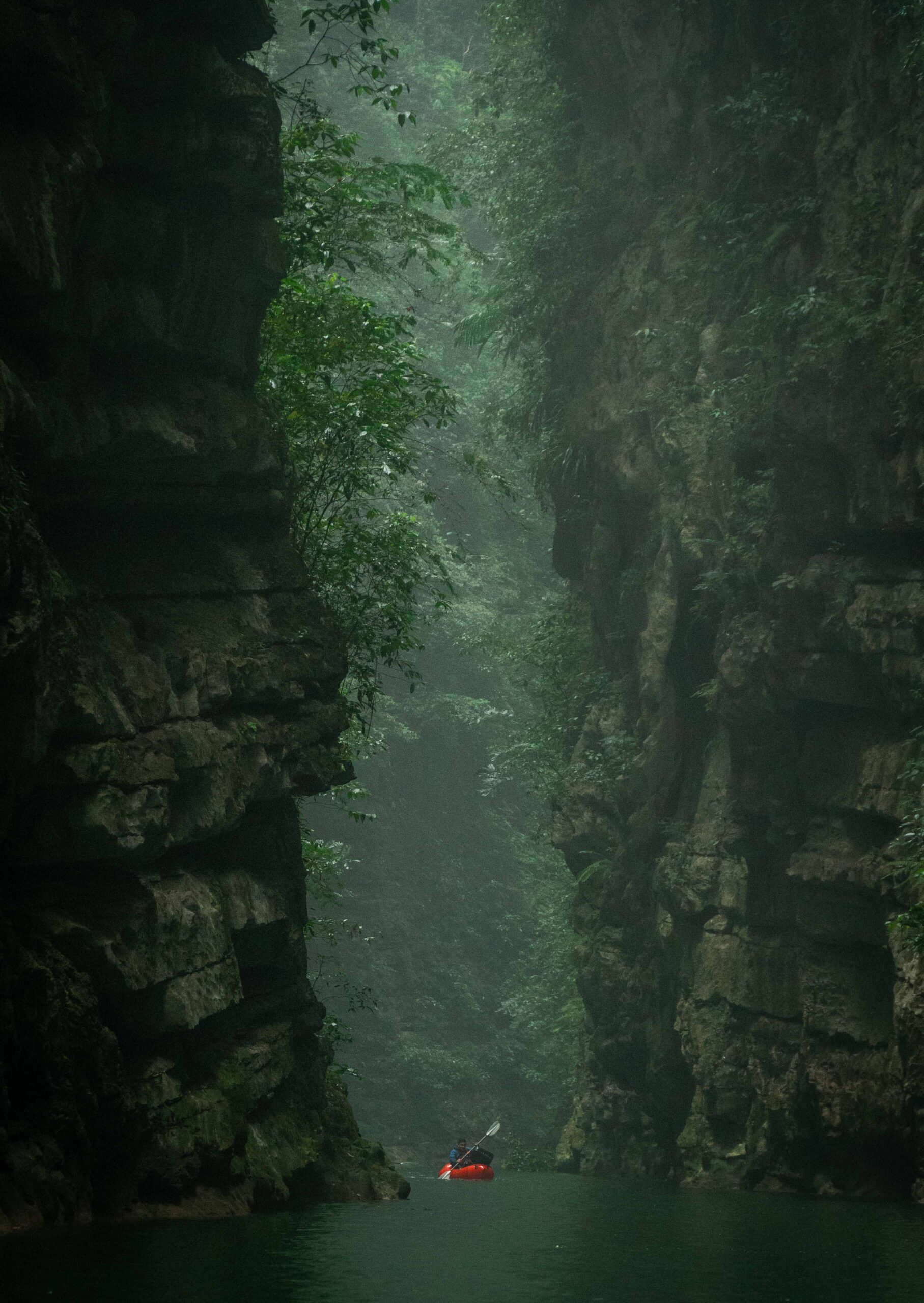
It's really real.
This trip is truly a once-in-a-lifetime experience. The feeling of venturing through this space is difficult to put into words. We will get to float through some of the most wild, beautiful, untouched and remote jungle in North America. The canyon itself is difficult to access due to remoteness and lack of human contact, so to experience the entirety of the river a lightweight, inflatable kayak known as a pack-raft is necessary. Pack-rafting is a relatively new sport, and because of this there are places out there that have been able to remain hidden and untouched.
No experience needed
The canyon provides you with the perfect progression of difficulty, allowing you to develop your paddling skills in a fun and engaging way. People with absolutely no paddling experience have done this trip, and by the end they consistently have a better time than everyone else. A good attitude comes above any physical skill on this trip!
DIY Journey
This is a DIY journey! Meaning you will be required to carry your own raft with your own gear; you will be responsible for setting up and taking down your own camp; cooking your own meals on the river, and packing your own gear to and from the canyon. To exit the canyon you will be required to ascend a 25m rappel. Proper climbing gear and instructions will be provided.
Pueblo Mágico
Our group will spend two days together exploring the beautiful boutique colonial town of San Cristóbal. Known as one of Mexico’s “magical towns” here, we’ll get a flavor for some of the country’s best cuisine and profound cultural heritage. We’ll explore the vibrant streets along with lively travellers from all across the world, and learn about Mayan culture with a local host. Bustling markets, ancient arts, some of the highest quality coffee in the Americas, and rich traditional dishes are some of what we’ll experience in San Cristóbal.
Connect
This 11 day experience will challenge you, introduce you to like-minded adventurers, and leave you with memories of a lost jungle that feels totally and absolutely unreal.
Connect
This 11 day experience will challenge you, introduce you to like-minded adventurers, and leave you with memories of a lost jungle that feels totally and absolutely unreal.
2024 EXPEDITIONS